

Key Takeaways
Ultra-Processed Food
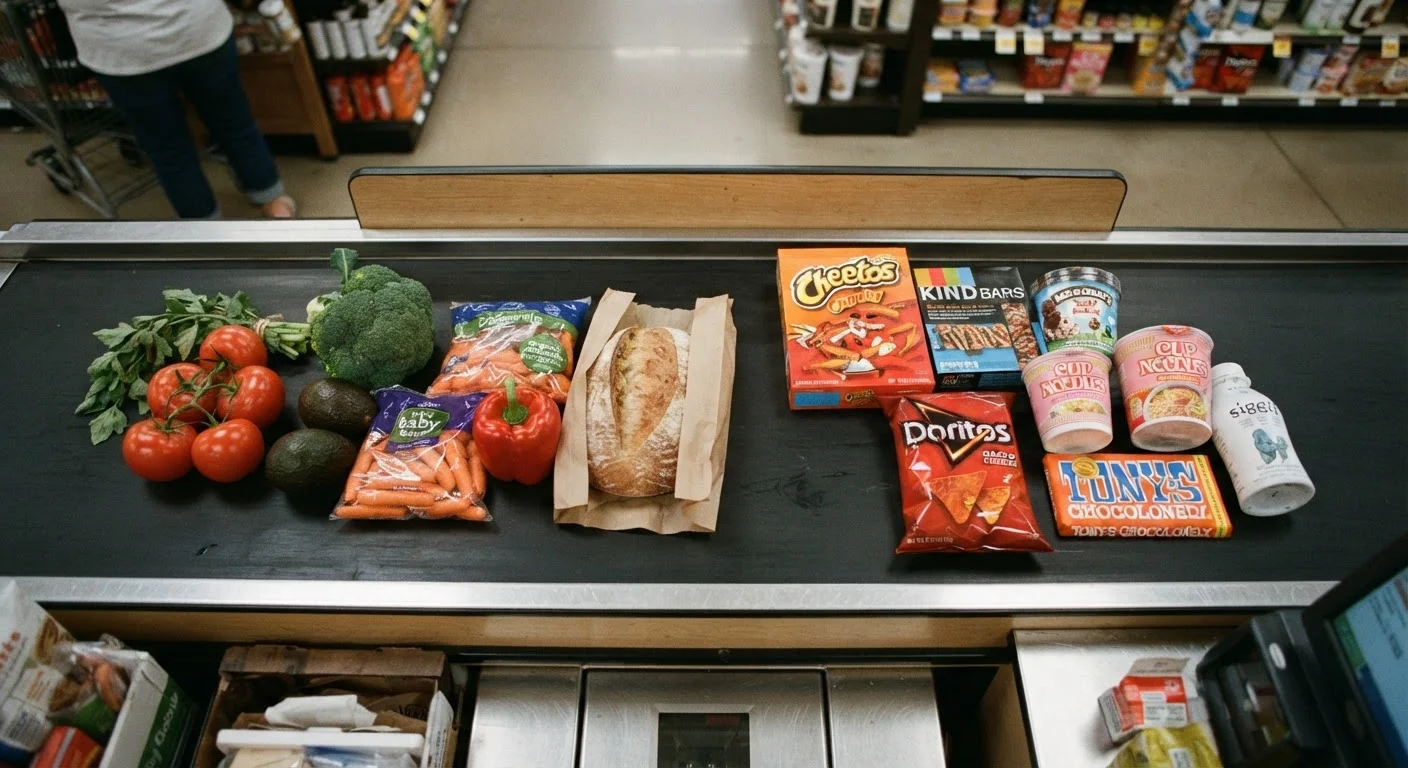
Ultra-processed foods are industrial food products made primarily from substances extracted or derived from foods - such as refined starches, hydrogenated oils, and added sugars - combined with additives like artificial flavors, colors, emulsifiers, and preservatives. They are typically manufactured to be convenient, highly palatable, and shelf-stable, and they contain little or no whole food. Think packaged snack cakes, flavored chips, reconstituted meat products, and many ready-to-heat meals.
The most widely used framework for classifying ultra-processed foods is the NOVA system, developed by researchers at the University of São Paulo, which groups foods into four categories based on the extent and purpose of industrial processing - not nutrient content alone.
Where the Term Comes From
The phrase "ultra-processed" didn't emerge from a government agency or a nutrition panel. It was coined by epidemiologist Carlos Monteiro and colleagues at the University of São Paulo in the early 2010s as part of the NOVA classification framework - a system that groups all foods into four categories based on the nature, extent, and purpose of their industrial processing.
NOVA's four groups run from unprocessed or minimally processed foods (fresh fruit, plain meat, eggs) through processed culinary ingredients (oil, flour, salt) and processed foods (canned fish, cheese, cured meats) to ultra-processed foods - the fourth and most industrialized tier. The framework was a deliberate departure from nutrient-focused models, built on the premise that how food is made matters as much as what it contains.
For a deeper look at the research building around this category, see what food scientists say about ultra-processed foods.
What NOVA Actually Looks For
NOVA's fourth category is defined not by a single ingredient or nutrient threshold, but by a combination of features. Ultra-processed foods are typically characterized by:
- Industrial ingredients not used in home cooking - hydrolyzed proteins, modified starches, interesterified fats, high-fructose corn syrup
- Cosmetic additives added to make products more appealing - artificial flavors and colors, flavor enhancers, texture agents
- Technological additives for shelf-life or processing efficiency - emulsifiers, anti-caking agents, gasses used in packaging
The practical test researchers use: if you looked at the ingredient list and found substances unavailable in an ordinary grocery store or unrecognizable as kitchen staples, the product likely qualifies. This is distinct from asking whether a food is high in sugar or low in fiber - a nutrient profile approach.
~57%
Share of U.S. calories from ultra-processed foods
Research published in BMJ Open estimated that ultra-processed foods accounted for roughly 57% of energy intake in the average American diet, based on national dietary survey data.
4 groups
NOVA food classification tiers
The NOVA system organizes all foods and beverages into four groups based on the degree and purpose of industrial processing, with Group 4 designated as ultra-processed.
~2010
Year NOVA framework was introduced
Epidemiologist Carlos Monteiro and the NUPENS research group at the University of São Paulo first published the NOVA classification framework in the early 2010s.
Understanding this distinction is also useful when reading a Nutrition Facts label, which reflects nutrients but not the degree of industrial processing.
Why Researchers and Regulators Push Back
NOVA has generated substantial epidemiological research linking ultra-processed food consumption to outcomes including cardiovascular disease, type 2 diabetes, and all-cause mortality. But the classification system itself faces meaningful scientific criticism.
The heterogeneity problem is the most cited concern: NOVA groups products as different as a sugary breakfast cereal and a fortified meal-replacement shake into the same category because both contain additives - even though their nutrient profiles differ enormously. Critics argue this makes it difficult to determine which specific aspects of ultra-processing, if any, are responsible for observed health associations.
“The NOVA classification is a useful tool for generating hypotheses about diet and health, but it is not a substitute for understanding the specific mechanisms by which dietary patterns affect the body. Lumping thousands of products into one category inevitably sacrifices precision.”
— Nutrition Science Research Community, Paraphrase reflecting a widely held methodological critique among food scientists and nutrition epidemiologists
There is also a methodological challenge. Most studies linking ultra-processed foods to health outcomes are observational, meaning they identify associations rather than causes. People who eat large amounts of ultra-processed food may also have other dietary patterns, income constraints, or lifestyle factors that contribute to health outcomes. As with any nutrition headline, it's worth knowing how to evaluate the underlying studies - see how to assess food studies in the news.
Some food scientists also question whether additives that have been individually reviewed for safety - such as certain emulsifiers - should be treated as inherently harmful simply because of their industrial origin.
What This Means in a Real Kitchen
The definitional debate does not mean the concept is useless - it means consumers should understand its limits. A few practical implications:
- The ingredient list is more informative than the front of package. Terms like "natural flavors" or "no artificial preservatives" don't tell the whole story. Natural and artificial flavors are more similar than labels suggest - the ingredient list is where processing becomes visible.
- Context and quantity matter. Regularly eating a diet dominated by ultra-processed products is a pattern associated with less favorable health outcomes in research. Occasional consumption of a packaged food is a very different picture.
- Processing is not binary. Frozen plain vegetables are processed. Greek yogurt with a stabilizer is processed. Homemade bread made with commercial yeast is processed. The goal of food literacy is understanding degree and purpose, not pursuing an impossible standard of purity.
Staying anchored to whole and minimally processed foods as dietary staples - while remaining flexible - is consistent with mainstream dietary guidance and doesn't require memorizing a classification system.
This article is for informational purposes only and does not constitute medical or dietary advice. Consult a registered dietitian or qualified healthcare professional for guidance tailored to your individual health needs.