

Key Takeaways
Oil Degradation
Oil degradation is the process by which motor oil loses its protective and lubricating properties over time through heat, pressure, contamination, and chemical breakdown. Fresh oil is a carefully engineered fluid with additives designed to reduce friction, suspend contaminants, and resist oxidation. As those additives wear out and the base oil molecules break apart, the oil becomes less effective - and eventually harmful to engine components.
Degradation occurs through several mechanisms simultaneously: thermal oxidation (heat-driven molecular breakdown), additive depletion, viscosity shear, and contamination from combustion byproducts including soot, acids, and water vapor.
The Chemistry of Fresh Motor Oil
Motor oil starts as a precisely formulated blend of base oil and additives - antioxidants, detergents, dispersants, viscosity modifiers, and anti-wear agents. Each component has a specific job. Antioxidants slow the oil's reaction with oxygen and heat. Detergents keep internal surfaces clean. Dispersants hold contaminants in suspension so they reach the filter rather than clinging to metal. Anti-wear additives form a thin protective film on moving parts.
When oil is fresh, all of these systems work together. The oil flows at a predictable viscosity - meaning it's neither too thick nor too thin - and forms a consistent lubricating film between moving metal surfaces like crankshaft bearings, camshafts, and cylinder walls. Without that film, metal contacts metal, and wear accelerates rapidly.
~200°F+
Typical engine oil operating temperature
Engine oil commonly reaches temperatures above 200°F during normal operation, with peaks higher in turbocharged or high-performance engines - a primary driver of oxidation-based degradation.
Up to 44%
Viscosity loss from mechanical shear
Research in tribology literature indicates viscosity modifiers in multigrade oils can lose a significant portion of their effectiveness through mechanical shear over extended use, reducing the oil's ability to maintain a protective film.
7,500-10,000 mi
Typical synthetic oil change interval
Many vehicle manufacturers specify synthetic oil change intervals in this range under normal driving conditions, though actual intervals vary by make, model, and driving pattern - always verify with the owner's manual.
What Breaks Down - and Why
Every time the engine runs, oil is exposed to three primary stresses that accelerate degradation:
- Heat: Engine temperatures can exceed 200°F. Sustained heat drives oxidation - oxygen molecules bond with oil molecules, creating acidic byproducts and causing the oil to thicken over time.
- Mechanical shear: Viscosity modifiers - long polymer chains that help oil perform across temperature ranges - get physically broken apart by the rotating and sliding metal components. This causes the oil to thin out and lose its ability to maintain a protective film under load.
- Combustion contamination: Small amounts of unburned fuel, soot particles, and combustion gases (called blow-by) slip past piston rings into the crankcase. These mix with the oil, introducing acids and particles that accelerate additive depletion.
As these stresses accumulate, the additive package that protects the engine is gradually consumed. Once those additives are spent, the base oil alone can't do the job. See our guide to synthetic vs. conventional oil for how base oil chemistry affects this timeline.
Check Your Oil Between Changes
You don't need a mechanic to monitor oil condition between scheduled changes. Pull the dipstick with the engine off and cool, wipe it clean, reinsert it fully, then pull it again. Look at color, texture, and level. A gritty feel or a milky appearance warrants a prompt inspection - don't wait for the next scheduled interval.
Sludge, Acids, and the Real Damage
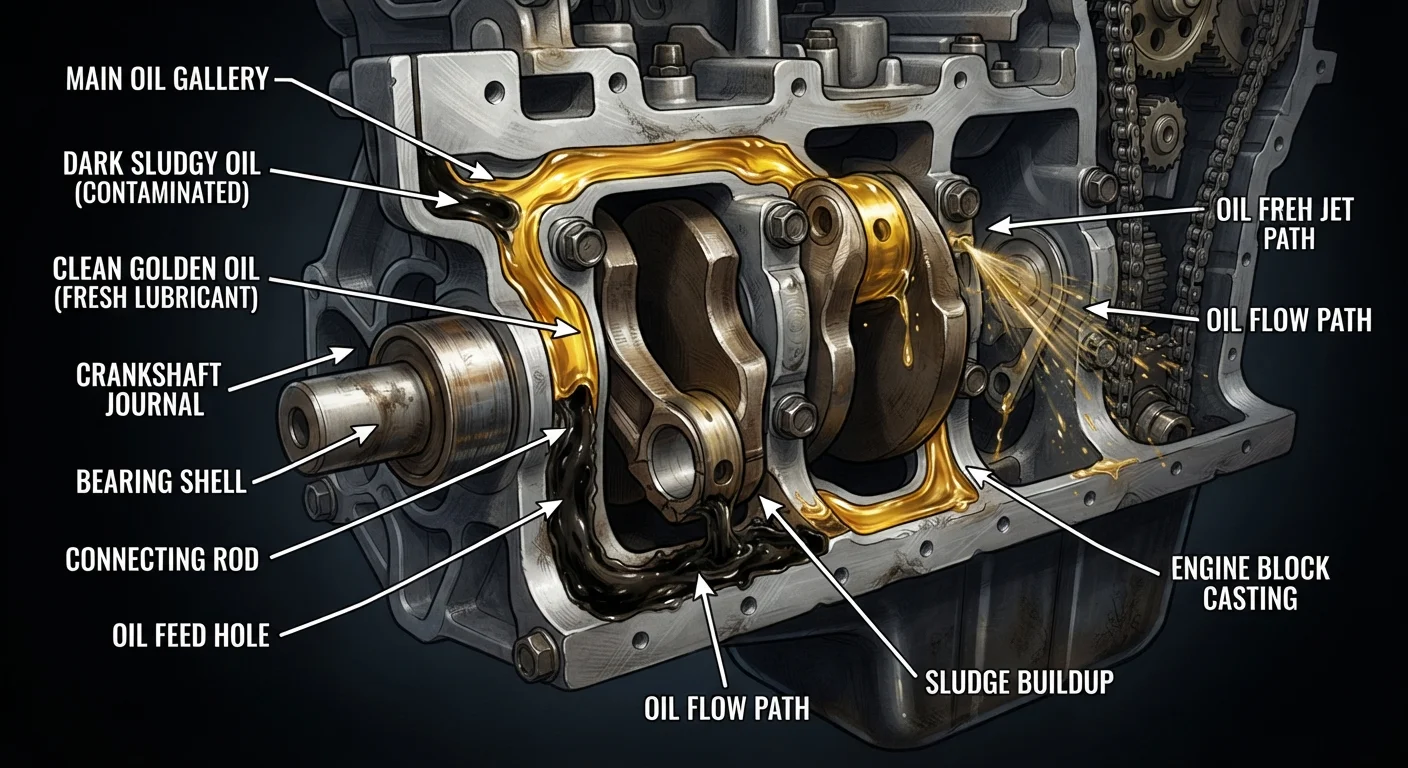
The end products of oil degradation aren't just inactive compounds sitting harmlessly in the crankcase. They actively harm the engine. Oxidation byproducts combine with moisture and combustion gases to form organic acids - these corrode soft bearing metals. Soot and oxidized oil compounds clump together into thick sludge that can clog narrow oil passages and starve components of lubrication.
Sludge accumulation is particularly dangerous because oil pressure may read normal on the dashboard gauge while a blockage prevents oil from reaching overhead camshafts or timing chain tensioners. The damage can be well underway before any warning light appears.
Deferred oil changes follow a predictable pattern: what starts as minor wear escalates into expensive repairs because the protective barrier broke down gradually and silently.
Oil Pressure vs. Oil Condition
A normal oil pressure reading on your dashboard gauge does not confirm that your oil is still protective. Pressure indicates flow volume, not oil quality. Severely degraded oil can circulate at normal pressure while providing inadequate lubrication. Monitoring oil condition requires checking the dipstick, not just the gauge.
Reading Intervals the Right Way
The old blanket rule of every 3,000 miles doesn't reflect modern engine and oil technology. Many vehicles with synthetic oil are engineered for intervals of 7,500 miles or more. Others, particularly turbocharged engines that run hotter, may have shorter intervals. The authoritative source is always your vehicle's owner's manual - not a sticker on the windshield or a general rule of thumb.
Driving conditions matter too. Short trips under five miles, frequent cold starts, towing, and stop-and-go traffic all put additional stress on oil and can warrant more frequent changes than highway driving. Some newer vehicles include an oil life monitoring system that calculates remaining oil life based on actual engine conditions rather than mileage alone. Understanding your scheduled maintenance intervals explains how to read these recommendations accurately.
You can also learn to check your oil's condition yourself. The process of reading fluid levels at home is straightforward and takes less than a minute. Dark color on the dipstick isn't always cause for alarm, but a gritty texture or milky appearance is worth having inspected promptly.