

Key Takeaways
Certified Pre-Owned (CPO)
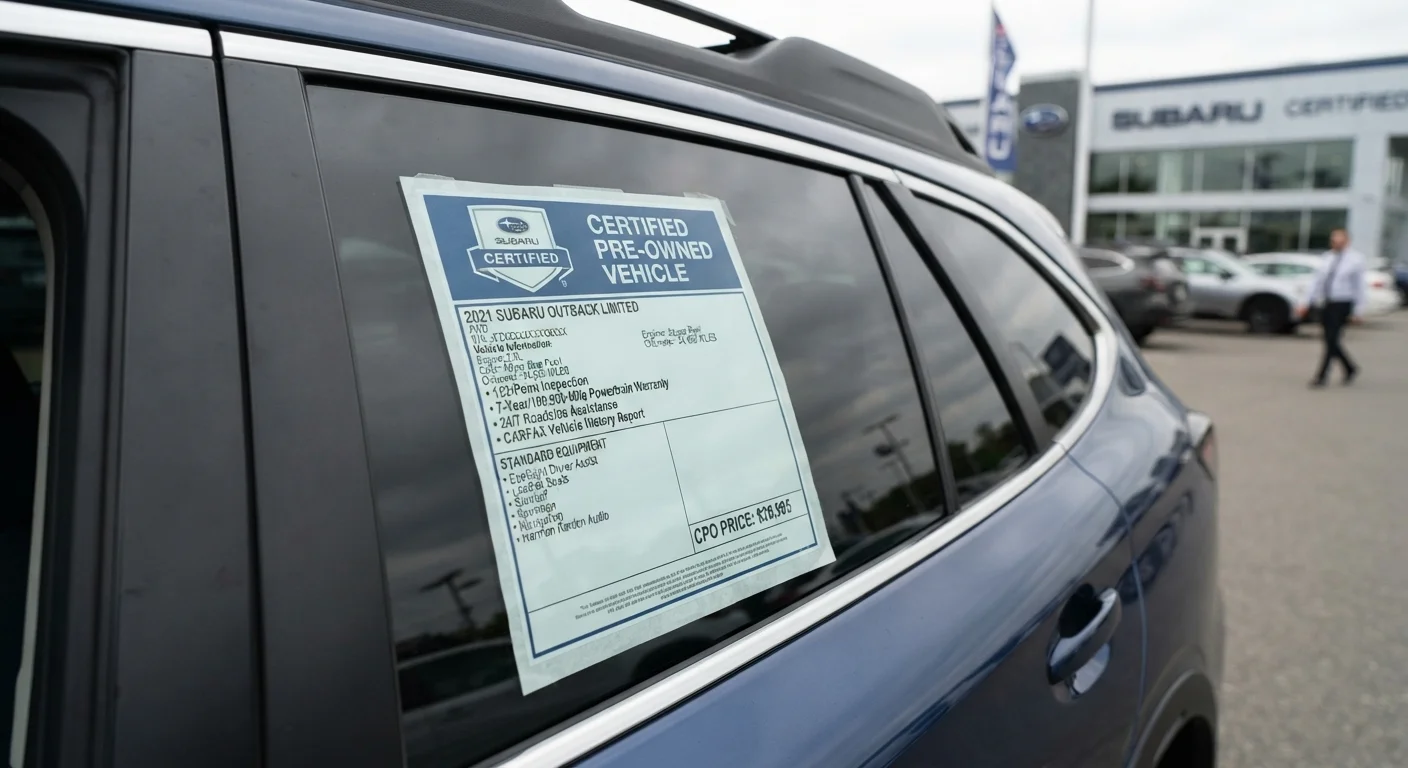
A certified pre-owned vehicle is a used car that has been inspected, reconditioned, and backed by a warranty through either the manufacturer or the dealership. The "certified" label is intended to signal a higher level of quality assurance compared to a standard used vehicle. However, not all CPO programs are created equal - coverage terms, inspection standards, and warranty length differ widely depending on who is offering the program.
Manufacturer-backed CPO programs are distinct from dealer-certified programs. Manufacturer programs must meet factory-defined criteria and are administered directly by the automaker; dealer programs are set by individual dealerships and carry no standardized requirements.
Why "Certified" Means Different Things at Different Dealerships
Walk onto any used car lot and you'll encounter the CPO label attached to a wide range of vehicles at a wide range of prices. What many buyers don't realize is that the word "certified" is not federally regulated - any dealer can technically apply it using their own internal criteria. The substantive distinction is between manufacturer-backed CPO programs and dealer-certified programs.
Manufacturer programs require vehicles to meet factory-defined standards: typically a maximum age (often five to seven years), a mileage ceiling (commonly under 80,000 miles), a clean title history, and a multi-point inspection performed by a factory-trained technician. Dealer programs operate on the dealer's own terms, which may involve a shorter checklist, looser standards, and a warranty funded by the dealer rather than the automaker.
This distinction matters because manufacturer-backed warranties are enforceable at any franchised dealership in the automaker's network - meaning if you need a repair covered under warranty, you're not locked into one location. Dealer warranties may restrict you to the selling dealership only.
"Certified" Is Not a Regulated Term
Unlike USDA-certified organic or EPA emissions ratings, there is no federal agency that defines or enforces what "certified" means for a used vehicle. The strength of a CPO label depends entirely on who is administering the program and what they have committed to in writing. Always ask whether a program is manufacturer-backed and request the written warranty document before making assumptions about coverage.
What a CPO Inspection Actually Covers
Manufacturers publish their CPO inspection checklists, and reading one is instructive. A typical manufacturer checklist runs 100 to 200 inspection points covering the engine, transmission, brakes, suspension, electrical systems, and safety equipment. Items that don't meet factory specifications must be reconditioned before the vehicle qualifies.
What the checklist often won't resolve is prior accident history. Structural repairs may pass a visual inspection even when underlying alignment or frame geometry is subtly compromised. That's why pairing a CPO purchase with a full vehicle history check is a smart baseline. Our guide on what a vehicle history report actually tells you explains what that data can and can't surface.
For further assurance, many buyers also schedule an independent pre-purchase inspection before finalizing a CPO deal. See what a mechanic checks in a pre-purchase inspection for a detailed breakdown of that process.
100-200
Inspection points in a typical manufacturer CPO checklist
Most major automaker CPO programs publish multi-point inspection criteria covering mechanical, safety, and cosmetic items.
~$1,500
Typical CPO price premium over non-certified comparable vehicles
Industry analyses have estimated the average CPO premium in this range, though it varies considerably by make, model, and market conditions.
Reading the Warranty Terms Before You Assume Coverage
The CPO warranty is where the real variation lives. Most manufacturer programs include two components: a limited powertrain warranty covering the engine and transmission, and a comprehensive or bumper-to-bumper extension that covers a broader set of systems. The length of each component, the deductible per visit, and the list of exclusions are program-specific.
Common exclusions include wear items (brake pads, tires, wiper blades, filters), interior trim, glass, and infotainment software. Some programs exclude emissions components or charge separate deductibles for different types of repairs. Reading the actual warranty document - not the marketing summary - is the only way to know what you're actually getting.
Roadside assistance and loaner vehicle coverage are often bundled with manufacturer CPO programs, but again, terms differ. Confirm what triggers roadside eligibility, whether loaner vehicles are guaranteed, and whether coverage applies when you're far from a dealership in the manufacturer's network.
Ask for the Inspection Checklist - Before You Negotiate
Dealers are generally required to disclose CPO inspection results on request. Ask for the completed checklist and note any items that were flagged and reconditioned. This gives you a clearer picture of the vehicle's condition history and can inform your negotiating position. If a dealer is reluctant to share the checklist, treat that as a meaningful signal.
CPO vs. Buying Standard Used: Weighing the Trade-Off
CPO vehicles carry a price premium over comparable non-certified used vehicles. Whether that premium is justified depends on the strength of the specific program and your own risk tolerance. A strong manufacturer CPO program with a remaining bumper-to-bumper component and powertrain coverage extending several years can represent genuine value - especially on vehicles with higher repair cost profiles.
A dealer-certified vehicle with a 30-day warranty and a single-location restriction offers far less for the added cost. Comparing CPO to the private party and dealership paths more broadly is worth understanding before you commit. Our article on private party vs. dealership purchases outlines how the risk profiles differ across each route.
If you're working through your first used vehicle purchase, our practical walkthrough for first-time used car buyers covers the full process from budget-setting to title signing. And once you've settled on a vehicle, understanding the finance office is equally important - how to navigate the finance and insurance office can help you avoid common pitfalls in the final paperwork stage.