

Key Takeaways
Start here
Set a Realistic Budget Before You Shop
Next
Understand What You're Looking For
Then
Research the Vehicle and Its History
Almost there
Inspect, Test Drive, and Negotiate
Final step
Handle the Paperwork and Close the Deal
Set a Realistic Budget Before You Shop
The single most common first-car mistake is leading with the search rather than the budget. Before you open a single listing, get clear on what you can actually afford - not just the sticker price, but the full monthly cost of ownership.
Factor in insurance (which can vary significantly based on your age, location, and the vehicle type), fuel, routine maintenance, registration fees, and any loan payments. If you've never built a formal household budget, our plain-language budget walkthrough is a practical place to start before committing to a car payment.
As a general framework, many financial planners suggest keeping all vehicle-related costs under 15-20% of monthly take-home pay. If you're financing, get pre-approved through a bank or credit union before visiting dealerships - this tells you what rate you actually qualify for and prevents the finance office from being your first exposure to loan terms.
Get Pre-Approved Before You Shop
Arriving at a dealership with a pre-approval letter from your bank or credit union puts you in a much stronger negotiating position. You'll know your interest rate in advance and won't be dependent on whatever financing the dealership offers. Credit unions in particular often offer competitive rates for auto loans.
Understand What You're Looking For
Before comparing specific vehicles, define your actual needs. Think about daily commute distance, how many passengers you regularly carry, whether you need cargo space, and what terrain or weather conditions you drive in. A two-door coupe might be appealing but impractical if you're frequently loading gear or driving on rural roads.
Reliability history by vehicle class is publicly available through consumer research organizations and government databases. Narrowing your search to a category - compact sedan, small SUV, pickup - before obsessing over specific listings prevents distraction and keeps your priorities grounded.
Out-the-door price
The total amount you actually pay at the end of a vehicle transaction, including the sale price, sales tax, title fees, registration, and any dealer fees. This is the number that matters most in negotiation.
Vehicle history report
A document generated from a vehicle's VIN that summarizes its ownership history, accident records, title status, and odometer readings logged over time.
Pre-purchase inspection (PPI)
An independent mechanical examination of a used vehicle, performed by a mechanic of the buyer's choosing, before the sale is finalized.
Salvage title
A designation assigned to a vehicle that an insurance company has deemed a total loss - typically due to a severe accident, flood, or other major damage. Salvage-titled vehicles carry significant risks and reduced resale value.
VIN
Vehicle Identification Number - a unique 17-character code assigned to every vehicle that serves as its permanent identifier and links to its full history.
Pre-approval
An offer from a lender - such as a bank or credit union - confirming the loan amount and interest rate you qualify for, obtained before visiting a dealership.
Research the Vehicle and Its History
Once you've identified a vehicle you're seriously considering, research it thoroughly before scheduling a visit. The vehicle's 17-digit VIN is your key to its history - use it to pull a vehicle history report from a reputable reporting service. These reports typically document accident history, title issues (such as salvage or flood designations), odometer readings logged over time, and ownership changes.
Cross-reference the asking price against market value data. Understanding what comparable vehicles in your region are selling for gives you a factual baseline for negotiation.
Flood and Salvage Titles: Know Before You Buy
Vehicles with salvage or flood-damaged titles may appear structurally sound but can carry long-term reliability and safety risks. In many states, these titles must be disclosed by law - but in private sales, verification is your responsibility. Always check the title status in the vehicle history report before proceeding.
Inspect, Test Drive, and Negotiate
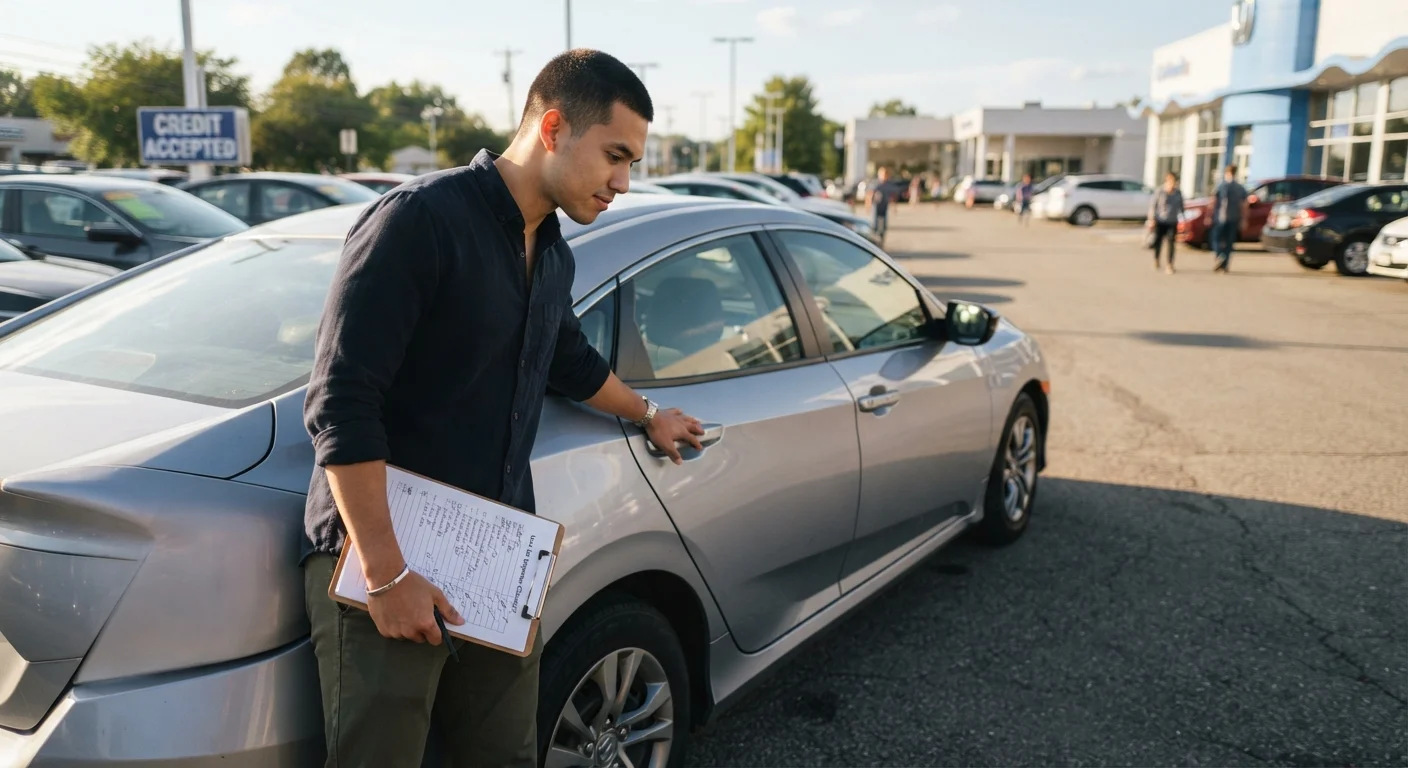
Never buy a used vehicle without seeing it in person. Walk around the entire exterior in daylight and look for inconsistent panel gaps, mismatched paint, or rippling bodywork - signs of prior repair. Check for rust along the wheel wells, frame rails, and undercarriage. Inside, test every switch, window, and screen.
Then drive it - on surface streets and at highway speed if at all possible. Notice how it accelerates, brakes, and handles. Listen for any rattles, grinding, or hesitation.
After the test drive, arrange an independent pre-purchase inspection with a mechanic you choose - not one recommended by the seller. A qualified mechanic can identify issues that aren't obvious to an untrained eye, and the cost is small compared to a surprise repair bill. If the seller refuses to allow an inspection, treat that as a serious warning sign.
When you're ready to negotiate, focus on the total out-the-door price, which includes taxes, fees, and any dealer-added charges. See our companion article on navigating the finance office for specifics on add-ons and contract terms to scrutinize.
Don't Skip the Independent Inspection
A vehicle can look clean and drive smoothly during a brief test and still have significant hidden issues - from frame damage to failing components - that only a lift inspection will reveal. If a seller pressures you to skip this step or won't accommodate it, walk away. The inspection fee is a small price compared to an unexpected repair.
Handle the Paperwork and Close the Deal
Once you've agreed on a price, the paperwork begins. Read every document before signing - don't allow yourself to be rushed. Confirm the agreed price appears correctly, that any verbal promises are in writing, and that you understand the terms of any financing.
After purchase, your immediate to-do list includes transferring the title, registering the vehicle in your name (requirements vary by state - check your state's DMV), and ensuring your insurance is active before you drive it home. For a full checklist of post-purchase ownership tasks, see what to do after you buy a car.
Once you're on the road, establishing good maintenance habits from the start protects your investment. Our car maintenance hub covers the essential upkeep every vehicle owner should know.
This article is for general informational and educational purposes only. It does not constitute financial, legal, or professional automotive advice. Consult qualified professionals for decisions specific to your financial situation or vehicle condition.