

Key Takeaways
Why Certain Costs Keep Catching Us Off Guard
Most budgets are built around the obvious: rent or mortgage, utilities, groceries, car payment. Those numbers are easy to remember because they're consistent and often large. The categories that quietly drain accounts are the ones that don't show up every month, arrive on an irregular schedule, or slip through automatically without a purchase decision attached.
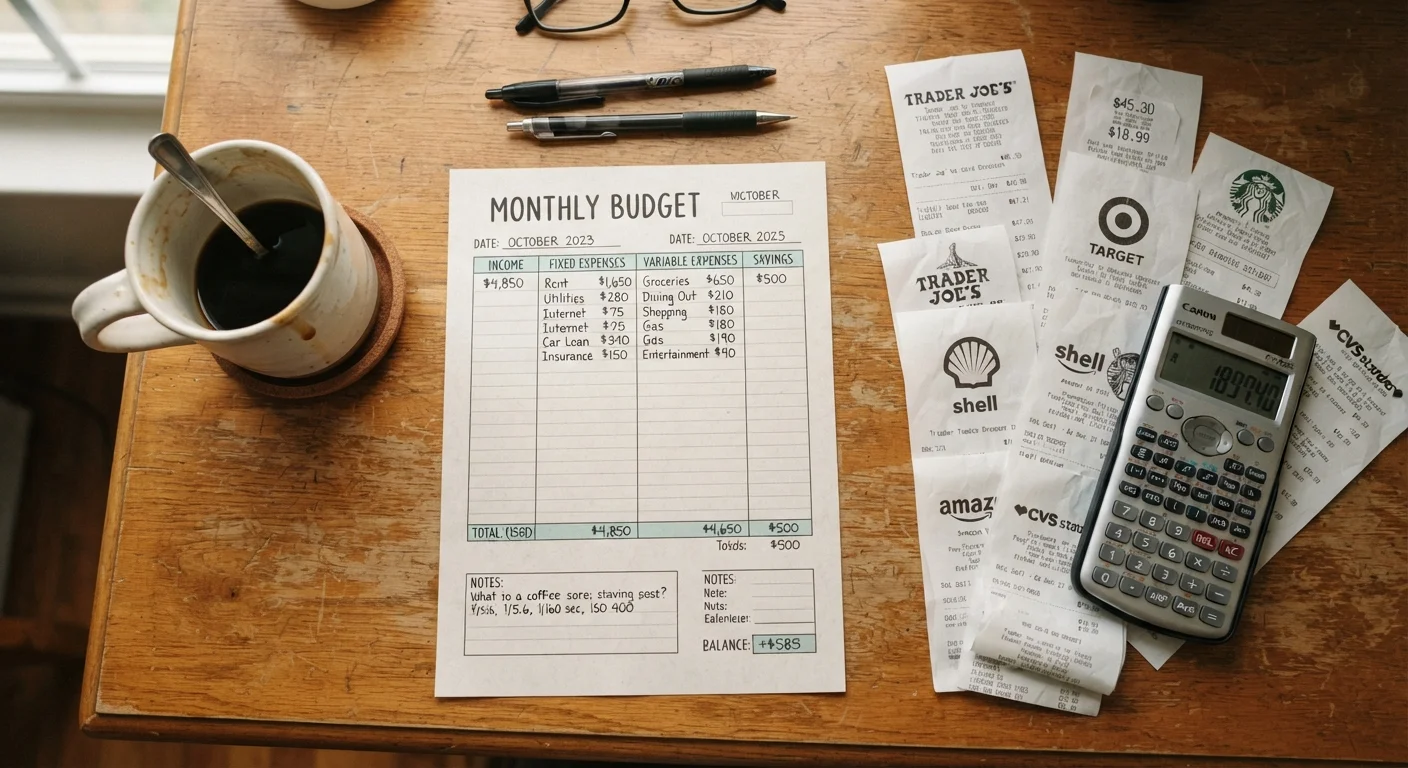
If your spending plan looks solid on paper but you still come up short, the gap usually isn't in the categories you're tracking - it's in the ones you skipped. As this breakdown of real monthly cash flow shows, most people underestimate several key areas before they even start building a budget.
The fix isn't complicated. Pull three to six months of bank and credit card statements and look for charges that weren't in your plan. Then give each one its own line. Here are the categories Americans most consistently forget.
Vehicle Maintenance and Repairs
Oil changes, tires, brakes, registration fees, and the occasional unexpected repair add up to far more than most drivers budget for. AAA has estimated that vehicle maintenance and repair costs can run several hundred dollars annually even for reliable cars - and a single major repair can easily exceed $1,000.
Because these costs are irregular, they often feel like emergencies when they're actually predictable. Budget a fixed monthly amount toward a vehicle maintenance fund rather than treating every repair as a surprise.
A single major car repair can undo months of careful saving if no fund exists for it.
Medical and Dental Out-of-Pocket Costs
Even with insurance, co-pays, deductibles, prescription costs, dental work, and vision care accumulate quickly. Many people budget for their monthly premium but not for the actual point-of-care costs that follow. A family with a $3,000 annual deductible could spend most of it before insurance kicks in meaningfully.
Look at last year's explanation-of-benefits statements and medical receipts to get a realistic annual figure, then divide it into monthly savings.
Health insurance premiums are only part of the picture; out-of-pocket costs often rival the premium itself.
Gifts and Celebrations
Birthdays, weddings, baby showers, graduations, and holidays arrive on a predictable calendar every year, yet most budgets treat them as surprises. The National Retail Federation consistently reports that holiday spending alone averages well over $800 per consumer in a typical year - and that doesn't include the rest of the gift-giving calendar.
Write out every anticipated gift occasion for the next 12 months, estimate a cost for each, total them, and divide by 12. That monthly number belongs in your budget. Sorting needs from wants can also help when deciding how much to allocate here.
Gift and celebration costs follow a predictable annual calendar - they only feel like surprises when unplanned.
Subscriptions and Recurring Digital Charges
Streaming services, cloud storage, software licenses, gym memberships, news paywalls, and app subscriptions can number in the dozens without feeling like significant spending. At $10-$20 each, five forgotten subscriptions represent $600-$1,200 per year leaving your account automatically.
Because these charges are automatic, they bypass the moment of decision that normally triggers budget awareness. A quarterly audit of your bank and card statements specifically for recurring charges is one of the highest-return budgeting habits you can build.
Automatic charges bypass the spending decision that keeps everything else in check.
Home Maintenance and Small Repairs
Homeowners and renters alike face maintenance costs that rarely appear in a monthly budget. For homeowners, financial planning guidance commonly suggests setting aside roughly 1% of a home's value annually for upkeep - though actual costs vary significantly by home age, size, and condition. Renters face costs too: replacing household items, replacing a broken appliance that isn't covered by a landlord, or pest control.
Deferring maintenance rarely saves money; small issues tend to become larger, more expensive ones over time.
Deferred home maintenance almost always costs more in the long run than addressing issues early.
Personal Care Beyond the Basics
Haircuts, salon services, grooming products, dry cleaning, and clothing replacement accumulate steadily. These costs tend to be classified mentally as "small" even when the annual total is substantial. Someone spending $60 every six weeks on haircuts and color is spending over $500 a year on that single line alone.
Track every personal care purchase for one month, then multiply by 12 and add in less-frequent costs like seasonal clothing. The result often surprises people.
Personal care feels like small spending - until you see 12 months of receipts side by side.
Making Room for the Irregular and the Invisible
None of these categories require a sophisticated budgeting system. The practical move is to estimate each category's annual cost, divide by 12, and set aside that amount monthly into a separate savings buffer or a labeled cash envelope. When the expense hits, the money is already there.
Start With a Statement Review
Before estimating future spending, look backward. Print or export three months of bank and credit card statements and highlight every charge that wasn't part of your written budget. Total those charges and annualize the figure. That number represents the minimum gap your current plan needs to close. This single exercise tends to reveal more than any budgeting app dashboard.
For subscriptions and automatic charges specifically, a single annual statement review can surface forgotten services worth canceling. Habits that quietly erode savings often include exactly these small recurring charges that never trigger a conscious spending decision.
If you prefer tracking without apps, pen, paper, and envelopes remain surprisingly effective for catching irregular expenses before they become surprises. The goal isn't perfection - it's building a budget that reflects how money actually moves in your life, not how you wish it did.
This article is for general informational purposes only and does not constitute personalized financial advice. Consider consulting a licensed financial professional for guidance tailored to your situation.