

Key Takeaways
Why Trail Wildlife Myths Are Genuinely Dangerous
Most hikers pick up wildlife advice secondhand — from campfire stories, social media posts, or half-remembered tips from a childhood nature documentary. The trouble is that acting on the wrong information during a real encounter can turn a startling moment into a serious injury. The gap between popular wisdom and sound, evidence-based guidance is wider than most people realize.
Before hitting the trail, it pays to verify what you think you know. For a broader look at pre-hike preparation, the trail-ready safety checklist covers everything from navigation tools to emergency communication. The myth-busting below focuses specifically on the animal encounters that generate the most dangerous misconceptions.
Myth
If a bear charges you, the best thing to do is run as fast as possible.
Fact
Running almost always makes things worse. Bears can sprint at speeds exceeding 30 mph — far faster than any human. Running can trigger a chase response even in a bear that was only bluffing.
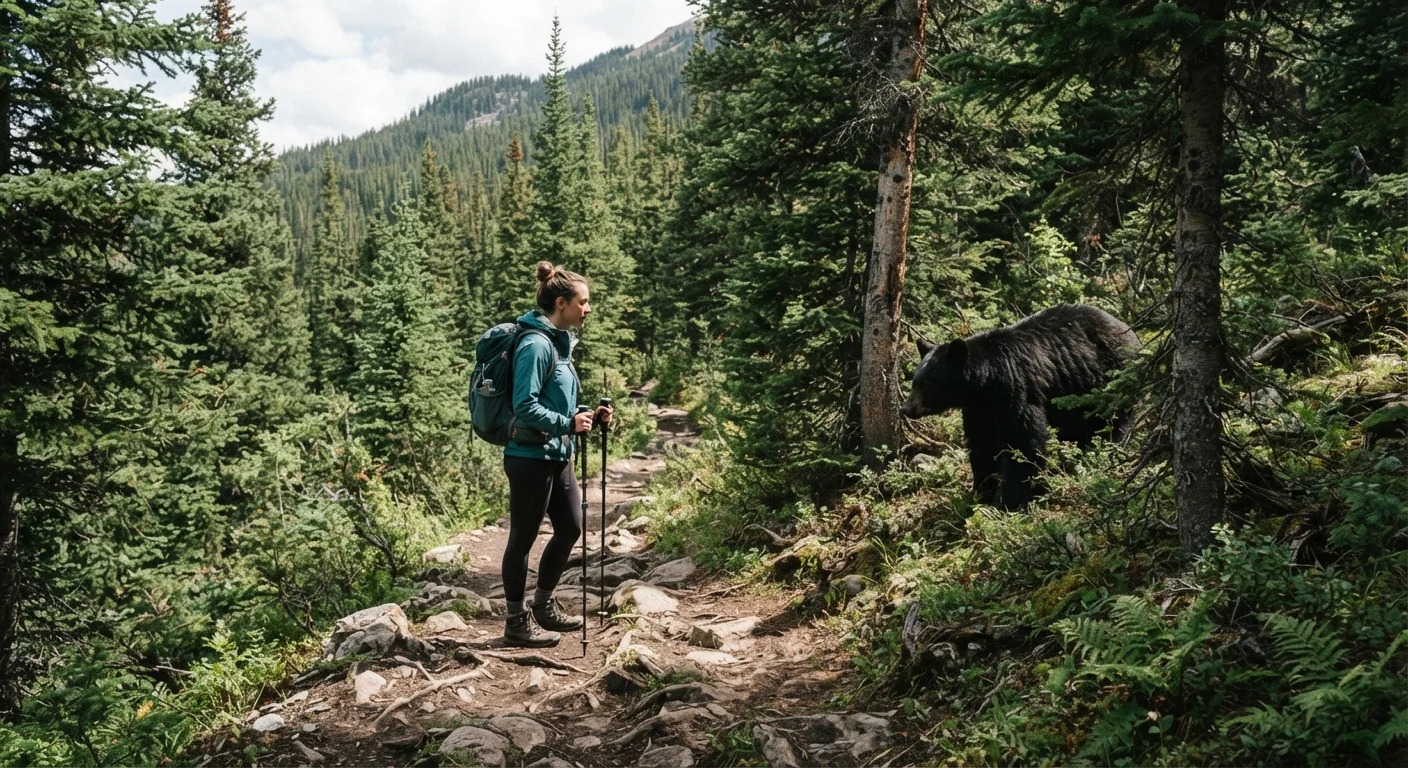
Most bear charges are bluff charges — the bear stops short, huffs, and retreats. Standing your ground, speaking in a calm, firm voice, and making yourself appear large gives the bear a chance to disengage without escalating. If a grizzly (brown bear) makes contact, wildlife managers advise playing dead: lie flat on your stomach, hands clasped behind your neck, legs spread to make it harder to flip you over. However, if a black bear makes contact, fight back aggressively — black bear attacks are predatory in nature, and playing dead removes your only effective defense.
Myth
Playing dead works for any bear attack.
Fact
Playing dead is specifically advised for defensive grizzly bear attacks. For black bear attacks — which are almost always predatory — fighting back is the recommended response.
Grizzly bears typically attack defensively when surprised or protecting cubs or a food cache. In these situations, playing dead signals you're no longer a threat. Black bears, which are far more common across the continental United States, rarely attack defensively. When they do attack — which is uncommon — it's usually because they see the person as prey. National park wildlife guidance consistently advises hikers to know which bear species inhabit the area they're visiting before setting out, since the correct response differs significantly between species.
Myth
Making eye contact with a mountain lion will provoke an attack.
Fact
Direct eye contact is actually part of the recommended response. Averting your gaze and crouching down signals vulnerability — the opposite of what you want to communicate.
If you encounter a mountain lion (also called a cougar or puma), wildlife agencies advise facing the animal directly, maintaining eye contact, standing tall, and making yourself appear as large as possible. Raise your arms, open your jacket, and speak firmly. If the lion approaches, throw rocks, sticks, or whatever is within reach — without bending down and making yourself smaller. Never crouch, never turn your back, and never run. Running activates a mountain lion's predatory instinct in the same way it does with domestic cats, only the stakes are far higher.
Myth
Snakes will chase you if you disturb them.
Fact
Snakes do not chase humans. They are defensive animals that strike only when they feel cornered, threatened, or accidentally touched — and they would rather flee than engage.
The vast majority of venomous snakebites in the United States occur when a person attempts to handle, kill, or get too close to a snake. A snake that holds its ground is communicating that it has nowhere to retreat — not that it's preparing to pursue you. The safest response to encountering a snake on the trail is to stop, give it space, and wait for it to move on. Step back calmly, go around it with a wide berth, and avoid the underside of rocks and logs where snakes commonly shelter.
Myth
Bear spray is only useful at very close range and isn't worth carrying.
Fact
Bear spray is effective at distances of up to 30 feet and is widely considered one of the most reliable deterrents available to backcountry travelers.
Research published in peer-reviewed wildlife journals has found bear spray to be highly effective at stopping aggressive bear behavior when deployed correctly. The key factors are accessibility (holstered on your hip, not buried in your pack), wind awareness (deploy crosswind or slightly upwind), and timing (wait until the bear is within effective range, around 30–60 feet, before deploying). Carrying spray in bear country is strongly encouraged by wildlife agencies, but knowing how to use it before you need it is equally important — consider practicing the draw motion before your trip.
Building Smarter Habits Before and During Your Hike
Correct knowledge about wildlife is only part of the equation. Your behavior on the trail — how loudly you move, how you store food, how you react to rustling in the brush — shapes the likelihood of a close encounter in the first place. Wildlife activity also shifts dramatically with season and geography, so understanding what animals are present and when they are most active in the region you're hiking is genuinely useful preparation.
For a regional breakdown, the seasonal hiking guide walks through how conditions and wildlife behavior shift from the Southwest to the Pacific Northwest. And if you want to reinforce safer decision-making across the board, ten evidence-backed trail habits offers practical routines that reduce risk on any outing.
Never Approach, Feed, or Corner Wildlife
No matter how calm or habituated an animal appears, approaching it for a closer look or photograph significantly increases the risk of an aggressive response. Feeding wildlife is dangerous, illegal in many protected areas, and causes animals to associate humans with food — making future encounters more dangerous for both hikers and animals. Always maintain the minimum safe viewing distances posted by park or land management authorities.
Respecting wildlife and their habitat also aligns with responsible trail ethics. The Leave No Trace principles — particularly proper food storage and not approaching or feeding wildlife — directly reduce dangerous encounters for hikers who follow them.