

Key Takeaways
Safari
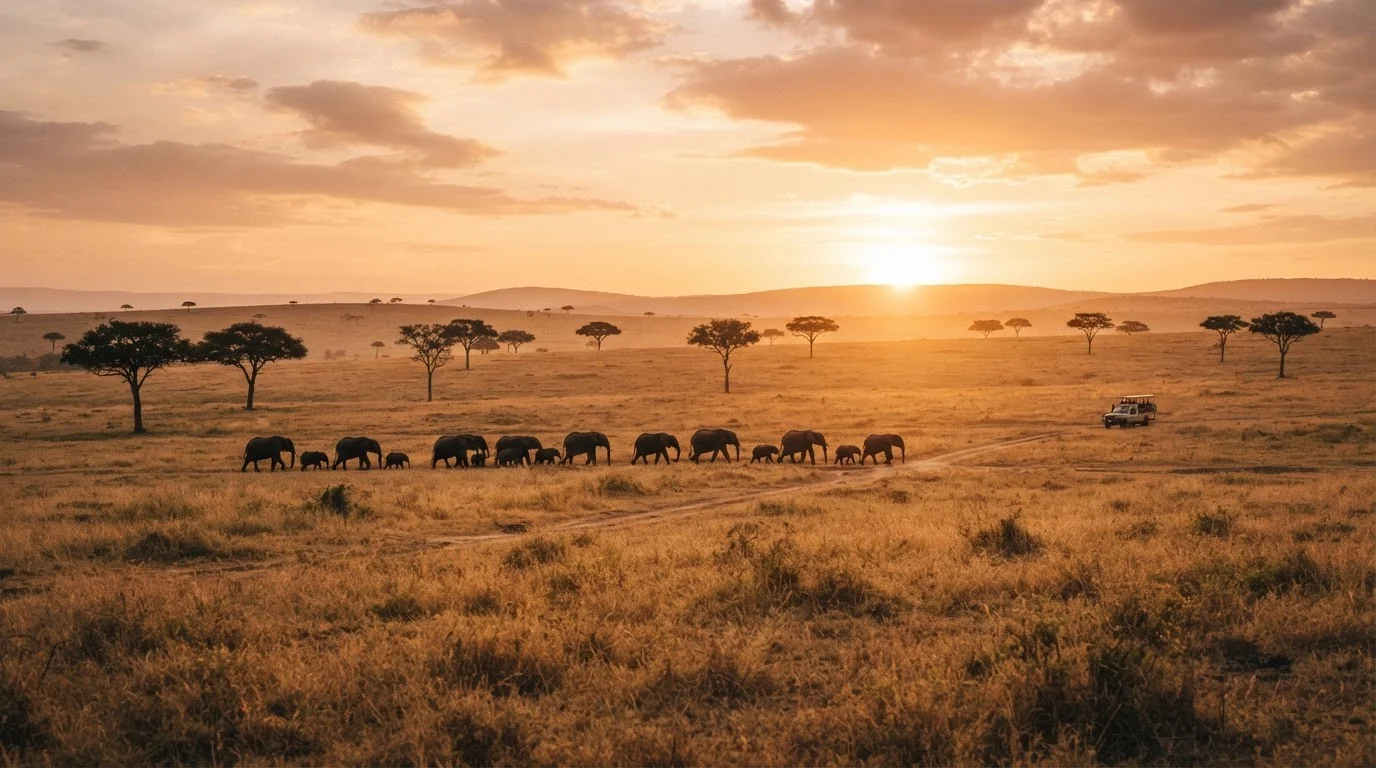
A safari is an overland wildlife-viewing journey, most commonly conducted in sub-Saharan Africa, where travelers observe wild animals in their natural habitats from guided vehicles or on foot. The word comes from the Arabic and Swahili term for 'journey.' Modern safaris range from rugged camping expeditions to luxury lodge stays, but all center on immersive encounters with wildlife in protected conservation areas.
Safari experiences vary significantly by ecosystem, country, and season. The Big Five - lion, leopard, elephant, buffalo, and rhinoceros - are frequently referenced benchmarks, though sighting any particular animal is never guaranteed.
What a Safari Day Actually Looks Like
First-time safari travelers are often surprised by the structure of a typical day. Most game drives depart before sunrise - sometimes as early as 5:30 a.m. - to catch animals active in the cooler morning hours. A second drive usually runs from late afternoon into early evening. Midday is spent resting at camp or lodge, as midday heat reduces animal movement and visibility.
Drives can last three to five hours and involve long stretches of scanning open terrain punctuated by sudden, extraordinary sightings. Patience is a genuine requirement. A morning might pass with only distant glimpses of antelope before a leopard materializes in a tree with no warning. That unpredictability is central to the experience - it is not a zoo visit with scheduled encounters.
Ask About Vehicle Type Before Booking
Vehicle types vary: open-sided Land Rovers, enclosed minibuses, and pop-top vans each offer different vantage points. Ask your operator about vehicle configuration when comparing options - elevated seating and open sides can significantly affect photography and sightlines.
Vehicle types vary: open-sided Land Rovers, enclosed minibuses, and pop-top vans each offer different vantage points. Ask your operator about vehicle configuration when comparing options - elevated seating and open sides can significantly affect photography and sightlines.
Geographic Regions and What They Offer
Africa's safari regions are not interchangeable. East Africa - particularly Kenya's Masai Mara and Tanzania's Serengeti - is famous for the annual Great Migration, when roughly 1.5 million wildebeest and zebra move between ecosystems in a pattern that shifts with rainfall. Timing your visit to coincide with river crossings is possible but not guaranteed.
Southern Africa offers a different experience. Botswana's Okavango Delta provides water-based safaris by mokoro (dugout canoe) alongside traditional game drives. Zimbabwe's Hwange National Park hosts one of Africa's largest elephant populations. South Africa's Kruger National Park is often cited as an accessible entry point for first-timers, with well-developed infrastructure and self-drive options in addition to guided tours.
East and Southern Africa are the most established safari destinations, but countries like Rwanda (renowned for mountain gorilla trekking) and Uganda offer compelling, distinct wildlife experiences. Each region carries different entry requirements, health considerations, and logistical realities. For broader destination planning context, see our pre-trip planning checklist before committing to a destination.
~1.5 million
Wildebeest in the Great Migration
The annual Great Migration between Tanzania's Serengeti and Kenya's Masai Mara involves roughly 1.5 million wildebeest alongside hundreds of thousands of zebra and gazelle.
4-6 weeks
Recommended pre-departure health prep lead time
Travel health authorities generally recommend consulting a travel medicine provider four to six weeks before departure to allow time for vaccinations and medication to take effect.
30+
African countries with safari tourism
Safari experiences are available across more than 30 African nations, spanning ecosystems from East African savannas to Southern African bushveld and Central African rainforests.
Health and Safety: What to Prepare For
Health preparation for a safari is not optional. Malaria is present across most sub-Saharan safari destinations, and prevention - whether through medication, protective clothing, or insect repellent - requires planning that begins before you leave home. Yellow fever vaccination is required for entry into several African countries and is recommended for others; requirements can change, so verify with your destination country's official entry requirements and a licensed travel medicine provider.
Beyond disease prevention, remote safari locations mean medical care can be hours away. Travel insurance that includes emergency medical evacuation coverage is widely considered essential, not optional. Discuss your complete health history with a physician or travel medicine clinic ideally four to six weeks before departure.
Wildlife safety follows strict protocols for good reason. Operators instruct guests to remain in vehicles at all times during drives, maintain silence near skittish animals, and follow guide directions without exception. These rules protect both the wildlife and visitors. For a broader perspective on responsible wildlife encounters, our guide on wildlife encounter safety covers the principles that apply across outdoor settings.
Entry Requirements Change - Always Verify
Visa policies, vaccination requirements, and travel health advisories for African safari destinations can change with limited notice. Always check current requirements through your government's official travel advisory portal and the destination country's embassy or consulate before booking. Do not rely solely on operator-provided information for regulatory requirements.
Setting Realistic Expectations Before You Book
Safari marketing tends toward the extraordinary - and extraordinary moments do happen. But a well-calibrated first safari is built on realistic expectations. Not every park delivers Big Five sightings in a single day. Weather, seasonal animal movement, and sheer chance all factor in. First-time visitors who frame a safari as an immersive experience in a functioning ecosystem - rather than a checklist tour - tend to return with far richer memories.
Itinerary structure matters too. Multi-night stays in a single park generally outperform rushed itineraries that attempt to cover multiple destinations in quick succession. Guides learn the terrain and animal patterns over repeated drives, which benefits guests who stay longer. If you're newer to structured international trip planning, our overview on building a travel itinerary that actually works applies many of the same principles to destination-based travel.
Finally, verify that any operator you consider holds current licensing from the relevant national tourism authority. Ask about guide certifications, vehicle safety standards, and conservation practices. A reputable operator will welcome those questions.
This article is for general informational purposes only. Health guidance, entry requirements, and travel conditions can change; always consult a qualified healthcare professional for medical advice and verify current requirements with official government sources before traveling.