

Key Takeaways
Our Verdict
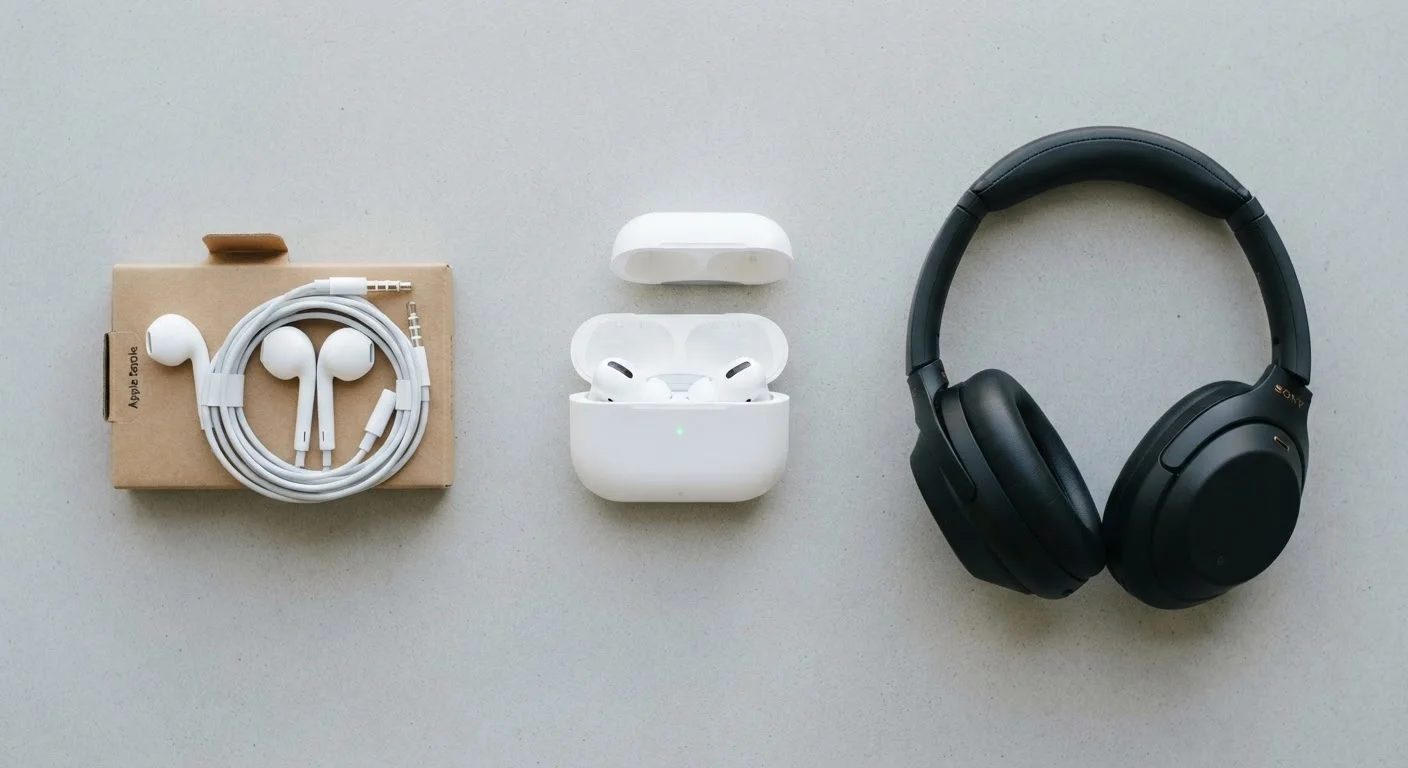
Each audio form factor solves a different problem. Wired earbuds are a no-fuss everyday workhorse; wireless earbuds win on gym-bag convenience; and over-ear headphones reward listeners who prioritize immersive sound at home or in the office. Matching the device to your daily context will serve you far better than chasing specs alone.
| Best for | Recommended |
|---|---|
| Commuters and remote workers who need reliable call quality | Wired Earbuds |
| Active users who want cable-free freedom during workouts or travel | Wireless Earbuds |
| Home listeners and focused workers who prioritize audio depth | Over-Ear Headphones |
Why Form Factor Matters More Than You Think
Most people choose audio gear based on price or brand familiarity, but the shape and design of a listening device - its form factor - determines nearly everything about how it fits into your life. A pair of premium over-ear headphones collecting dust because they're awkward on the subway is a worse investment than a simple set of earbuds you actually use every day.
The three dominant options - wired earbuds, wireless (Bluetooth) earbuds, and over-ear headphones - each make specific trade-offs in sound quality, convenience, battery dependency, and physical comfort. Understanding those trade-offs is the practical starting point for any decision. For a broader grounding in audio and device terminology, the Consumer Electronics Terms Every Owner Should Know guide can help decode specs you'll encounter while shopping.
Wired Earbuds: Dependable and Overlooked
Wired earbuds connect directly to a device via a 3.5mm headphone jack or USB-C adapter. They require no pairing, carry no battery, and introduce essentially zero audio latency - the gap between a sound being produced and you hearing it. That makes them quietly reliable for video calls, language learning apps, and any situation where sync between audio and visuals matters.
Their key limitations are physical: the cable can tangle, snag, or restrict movement. Compatibility has also narrowed; many modern smartphones have eliminated the headphone jack, requiring an adapter that adds one more thing to carry. Still, for commuters who want something they can grab, plug in, and forget, wired earbuds remain a practical and often undervalued option.
Check Jack Compatibility Before You Buy
If you're leaning toward wired earbuds, confirm whether your phone or laptop has a 3.5mm headphone jack - many newer devices do not. A USB-C to 3.5mm adapter resolves this, but it's worth checking before purchase so you're not caught off guard. Keep a spare adapter if you rely on wired audio daily.
Wireless Earbuds: Freedom With Trade-Offs
Wireless earbuds use Bluetooth to connect to a paired device, eliminating cables entirely. They're particularly popular for workouts, walking, and transit, where movement and pocket space are constraints. Most modern wireless earbuds come with a charging case that extends total listening time significantly - though the earbuds themselves typically last four to eight hours per charge, depending on settings and active noise cancellation (ANC) use.
The trade-offs are real. Bluetooth introduces a small amount of latency - generally imperceptible during music but occasionally noticeable when watching video without manufacturer compensation. Fit varies more than with wired models since there's no cable to stabilize the earpiece. And because they're small and wireless, they're easier to lose. Battery management also becomes part of the daily routine in a way wired listening never requires.
| Wired Earbuds | Wireless Earbuds | Over-Ear Headphones | |
|---|---|---|---|
| Battery required | No | Yes (4-8 hrs per charge) | Only if wireless model |
| Audio latency | Essentially zero | Low to moderate (Bluetooth) | Low (wired); moderate (wireless) |
| Portability | High - pocketable | High - case included | Low - bulky to carry |
| Noise isolation | Passive (ear tip seal) | Passive + ANC option | Passive (closed-back) or open |
| Sound quality ceiling | Moderate | Moderate to good | Good to excellent |
| Cable management | Required | None | None (wireless) or minimal |
| Best use case | Calls, budget listening | Active use, commuting | Home, focused work, media |
Over-Ear Headphones: Immersive Sound, Bigger Footprint
Over-ear headphones - whether open-back or closed-back - cup the entire ear rather than sitting inside or on top of it. This design creates a larger driver (the component that produces sound), which typically translates to richer bass response, wider soundstage, and better passive noise isolation compared to earbuds of equivalent price. Audiophiles and remote workers in busy households often prefer them for extended listening sessions.
Portability is the main concession. Over-ear headphones are heavier, don't fold flat into a pocket, and can feel warm during extended wear. Wireless versions add Bluetooth convenience but also add battery dependency and weight. Open-back models offer a more natural, airy sound signature but leak audio to those around you - something to consider in shared spaces. For home listening, media consumption, or long focused work sessions, they often deliver an experience earbuds simply can't replicate.
~55%
US adults using wireless earbuds regularly
Consumer surveys from multiple market research firms in recent years have estimated wireless earbud adoption at roughly half or more of US smartphone users.
4-8 hrs
Typical wireless earbud battery life per charge
Most wireless earbud manufacturers publish single-charge battery life in this range, with charging cases adding two to four additional charges.
Matching Your Listening Habits to the Right Device
Consider where and how you most commonly listen before settling on a form factor:
- Commuting or public transit: Wireless earbuds or wired earbuds work well. Compact wireless models with ANC can meaningfully reduce ambient noise on trains and buses.
- Exercise and outdoor activity: Wireless earbuds with a secure fit rating (look for IPX4 or higher water resistance) are the practical choice. Cables and large headphones create friction during movement.
- Remote work and video calls: A headset-style over-ear headphone or wired earbuds with a built-in microphone reduce echo and background noise pickup more consistently than relying on device microphones.
- Home listening and media: Over-ear headphones reward this use case most, especially if audio quality is a priority and you're not concerned about portability.
- Travel: Wireless earbuds in a charging case balance audio quality with TSA-friendly packing. Some travelers prefer over-ear headphones with ANC for long flights.
If your home audio setup involves smart or Bluetooth speakers, the Smart Speakers vs. Bluetooth Speakers article explains how those devices differ - which can inform how personal audio gear fits alongside them.
Volume Levels and Listening Duration
Extended listening at high volumes - regardless of form factor - can contribute to hearing fatigue and, over time, hearing damage. Health organizations generally recommend keeping personal audio devices below 60-70% of maximum volume and taking periodic listening breaks, particularly with earbuds that sit directly in the ear canal. If you notice ringing or muffled hearing after listening sessions, consult a healthcare professional.