

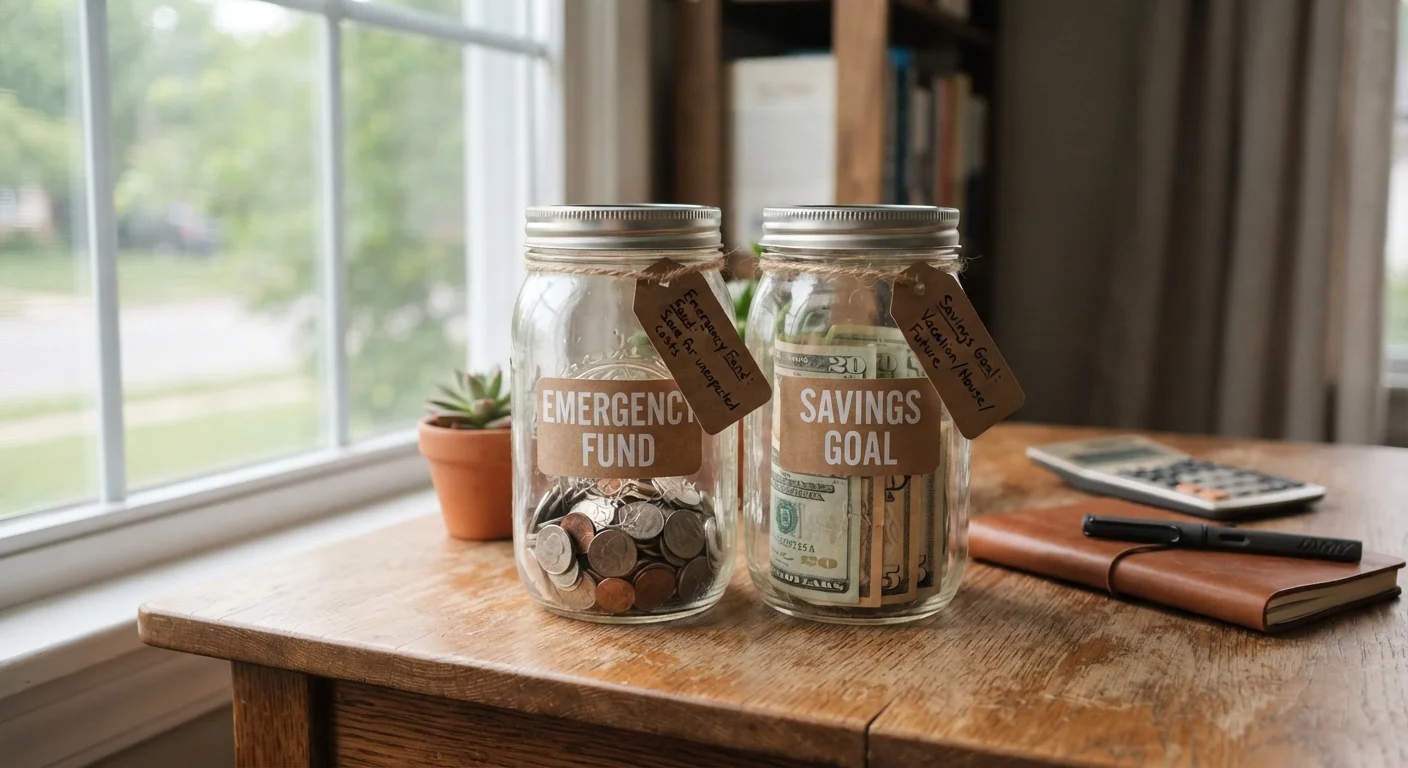
Key Takeaways
Option A
Emergency Fund
Your financial safety net for the unexpected.
Best for: Anyone who wants to cover sudden income loss, medical expenses, or urgent repairs without going into debt.
Option B
Savings Goal
A targeted account built around a specific future purchase or milestone.
Best for: Anyone working toward a defined objective - a vacation, a down payment, a new car, or a major home repair.
If you have no financial cushion and face unpredictable income or expenses
Emergency Fund
Without a buffer, a single unexpected bill can derail your entire budget. Build this first before saving toward optional goals.
If your emergency fund is already funded and you have a clear upcoming expense
Savings Goal
Once your safety net is in place, directing extra cash toward a specific target helps you reach it faster without disrupting your emergency reserve.
If you're starting from zero and can only save a small amount each month
Emergency Fund
Even a small emergency fund reduces reliance on credit cards or loans when surprises happen, making it the higher-priority foundation.
If you want to build financial security and work toward a specific milestone at the same time
Emergency Fund
Split your contributions - direct the majority to your emergency fund until it reaches a comfortable minimum, then shift more toward your goal.
What Makes These Two Accounts Fundamentally Different
An emergency fund and a savings goal can both sit in the same type of bank account and earn the same interest rate - but they serve completely different purposes, and treating them as one pot of money is a common mistake that costs people flexibility and clarity.
An emergency fund is a permanent financial cushion. You're not saving toward a finish line; you're maintaining a buffer that's always available. When you use it, you replenish it. Its purpose is defense: covering essential expenses when income drops unexpectedly, handling a medical bill, or paying for a car repair that can't wait. A widely cited rule of thumb is three to six months of essential living expenses - rent or mortgage, utilities, groceries, insurance, and minimum debt payments. The exact amount varies based on your household's income stability, number of dependents, and job security.
A savings goal, by contrast, has a destination. You're accumulating money for something specific - a vacation, a down payment, a home renovation, a new appliance. Once you reach that target and spend the money, the account's purpose is fulfilled (or reset for the next goal). See our guide to structuring accounts around different timeframes for help deciding which account types fit each kind of goal.
| Criterion | Emergency Fund | Savings Goal |
|---|---|---|
| Purpose | Cover unexpected essential expenses | Reach a specific planned purchase or milestone |
| Has a finish line? | No - maintained ongoing | Yes - spent when target is reached |
| Typical target amount | 3-6 months of essential expenses | Exact cost of the goal (varies widely) |
| When you access it | Only during genuine emergencies | When you've hit your target and are ready to spend |
| Priority order | Build first before most goals | Fund once emergency baseline is in place |
| Account type | High-yield savings or money market account | Separate savings account labeled for the goal |
| After you use it | Replenish back to target level | Reset or close the goal |
Why Keeping Them Separate Matters
When emergency funds and savings goals share one account, problems emerge quickly. Say you're saving for a vacation and an unexpected car repair drains half the balance. Now you don't know whether you're on track for the trip, behind on rebuilding your safety net, or both. The mental accounting becomes murky, and you lose the clear signal that a dedicated account provides.
Separate accounts give you a clean view of each bucket. Most online banks and credit unions allow you to open multiple savings accounts at no cost, often with the ability to label each one. This structure also creates a psychological barrier that makes it harder to casually dip into your emergency fund for non-emergencies.
~57%
Americans who cannot cover a $1,000 emergency from savings
A Bankrate survey found that fewer than half of U.S. adults could cover a $1,000 unexpected expense using savings alone.
3-6 months
Recommended emergency fund coverage for essential expenses
Most consumer finance educators and federal resources cite three to six months of essential living costs as a standard emergency fund target.
If your budget is already stretched, practical strategies for saving on a tight budget can show you how to split even small contributions across both priorities without feeling like you're going nowhere on either front.
How to Build Both Without Feeling Stuck
The most common objection to maintaining two savings accounts is that it feels impossible when money is already tight. The key is accepting that you don't have to fully fund one before starting the other - though most financial educators suggest prioritizing a starter emergency fund first.
A practical approach: aim for a minimum emergency fund of $1,000 to one month's expenses before actively contributing to a savings goal. Once you hit that floor, you can split future contributions - say, 70% toward your emergency fund and 30% toward your goal - until the emergency fund reaches your target level. After that, you can direct more toward the goal.
Automating transfers on payday removes the decision from your routine entirely, which is one of the most reliable habits for steady progress. Our article on building your first real savings plan from zero walks through account setup and contribution mechanics in detail.
When Your Emergency Fund Feels Too Large
Some savers reach a point where their emergency fund exceeds a comfortable level and wonder whether the extra cash is working hard enough. Holding too much idle cash has its own trade-offs - inflation gradually erodes purchasing power over time. If you're in that position, our article on the trade-offs of keeping too much cash in savings explores how to think through that balance.
Over time, revisit both accounts regularly. Life changes - income, expenses, family size, job security - and your targets should reflect your current situation. A yearly savings health check can help you catch when either account needs an adjustment.
This article is for general informational purposes only and does not constitute personalized financial advice. Consult a qualified financial professional for guidance tailored to your individual circumstances.