

Key Takeaways
Start here
Why Most People Never Start Saving
Next
Setting Goals That Actually Motivate You
Then
Choosing the Right Account to Start
Finally
Building the Habit: Automating and Sustaining Progress
Why Most People Never Start Saving
The most common reason people don't save isn't a lack of discipline - it's a belief that saving isn't possible yet. "I'll start when I earn more." "There's nothing left at the end of the month." These thoughts feel logical, but they keep the starting line permanently out of reach.
The truth is that waiting for perfect conditions is itself the obstacle. Saving is less about having surplus money and more about making a deliberate decision before the money disappears into daily spending. If you've struggled with this, you're not alone - and you're not failing. You just haven't had a workable system yet.
Before worrying about how much to save, it helps to get a clear picture of where your money goes each month. Our budgeting basics hub walks through straightforward ways to track spending without elaborate spreadsheets.
Starting Late Is Still Starting
There's no age or income level at which it becomes too late to build a savings habit. Whether you're 22 or 52, putting a consistent system in place changes your financial trajectory. The best time to start is always now, with whatever amount is realistic today.
This article is for general informational purposes only and is not personalized financial advice. For decisions specific to your situation, consider consulting a licensed financial professional.
Setting Goals That Actually Motivate You
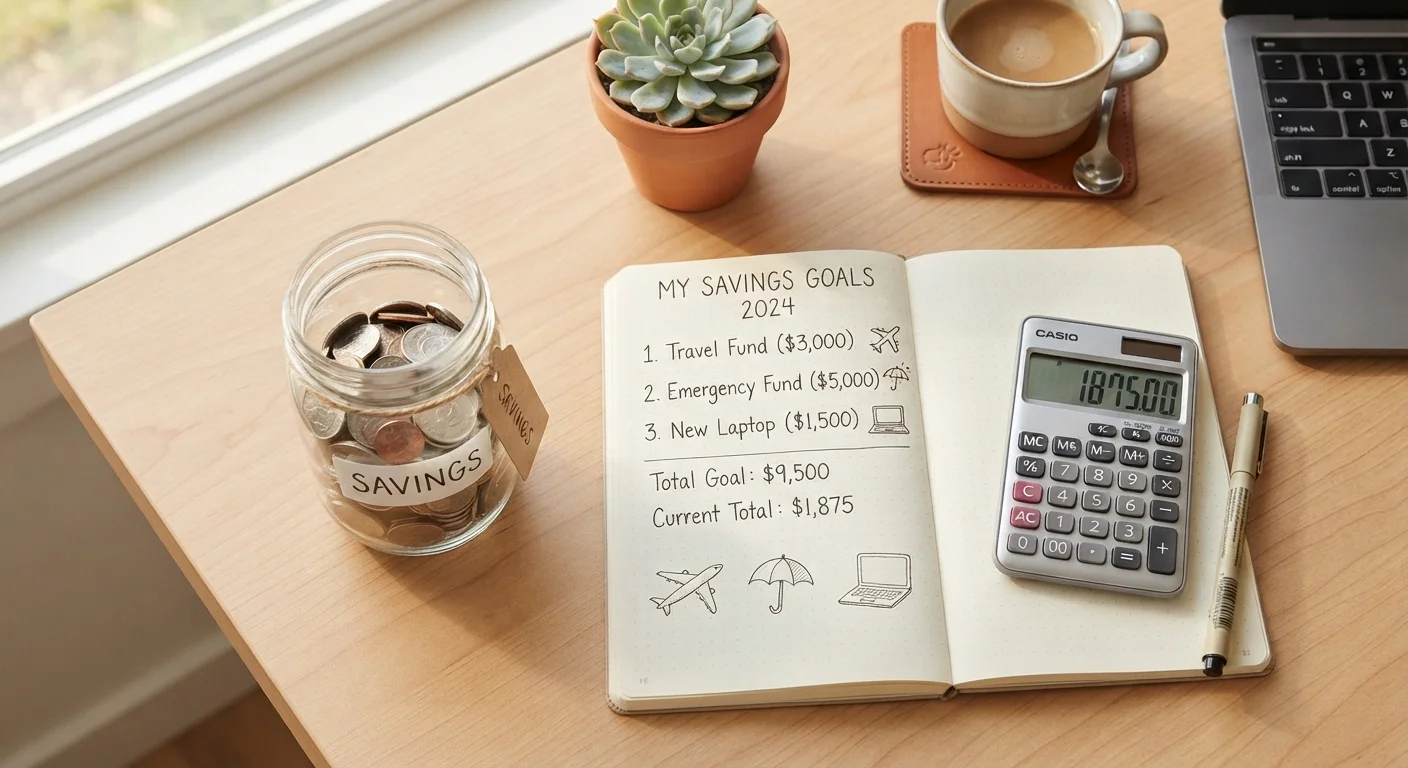
Vague intentions rarely survive contact with real life. "Save more money" is not a goal - it's a wish. Goals that actually change behavior are specific, time-bound, and connected to something you genuinely care about.
Start by asking what you want your savings to do for you. Common starting goals include:
- A basic emergency fund covering one to three months of essential expenses
- A specific purchase - a car repair fund, a travel trip, a new appliance
- Reducing financial stress by having a buffer between you and an overdraft
Once you have a target amount and a rough timeline, divide it into monthly contributions. If you want $600 in an emergency fund within a year, that's $50 a month - a concrete, trackable number. This kind of specificity turns saving from an abstract virtue into a practical task.
After you've built your first savings goal, you may want to think about how different time horizons call for different strategies. Our article on structuring accounts around your goals explores that in more depth.
Name Your Savings Goals
Many banks allow you to label savings accounts or sub-accounts with a custom name - like "Emergency Fund" or "Car Repairs." Naming a goal makes it feel more real and makes it psychologically harder to raid for impulse spending. If your bank supports it, take two minutes to set this up when you open the account.
Choosing the Right Account to Start
A savings account that lives inside your checking bank is convenient - but convenience can work against you. When savings and spending money share the same login screen, the boundary between them blurs. Many people find that opening a separate savings account, even at the same institution, creates enough friction to protect their progress.
When evaluating where to open a savings account, consider these factors:
- Interest rate (APY)
- Higher rates mean your balance grows faster. Online banks frequently offer higher annual percentage yields than traditional brick-and-mortar branches, though rates vary and change over time.
- Fees
- Monthly maintenance fees can erase the interest you earn, especially on small balances. Look for accounts with no fees, or accounts that waive fees when you meet simple conditions.
- Minimum balance requirements
- Some accounts require a minimum to avoid fees or earn the advertised rate. If you're starting small, confirm the terms before opening.
- Access and ease of transfer
- You want to be able to move money in easily - but not so easily that you're raiding the account on impulse.
There's no universally right answer on where to bank. The best account for a first-time saver is usually the one with the fewest barriers to opening and no fees that punish small balances.
Annual Percentage Yield (APY)
The real rate of return on a savings account over one year, factoring in compounding interest. A higher APY means your balance grows faster.
Emergency fund
A dedicated pool of savings set aside specifically for unexpected expenses - like a car repair or medical bill - so you don't have to borrow money when something goes wrong.
Automatic transfer
A scheduled, recurring movement of money from one account to another, set up in advance so it happens without any action on your part each time.
Compounding
Earning interest not just on your original savings, but also on the interest already accumulated. Over time, this causes balances to grow faster than simple interest alone.
Minimum balance
The lowest account balance a bank requires you to maintain to avoid fees or qualify for a specific interest rate.
Building the Habit: Automating and Sustaining Progress
The most reliable way to save consistently is to make it automatic. Set up a recurring transfer from your checking account to your savings account on the same day you receive each paycheck - even if the amount is small. When saving happens before you see the money in your spending account, you adapt your spending to what remains rather than saving whatever's left over (which is often nothing).
Start with an amount that feels almost too easy. You can increase it later. Perfection isn't the goal in the early months - the habit is.
A few practices that help people maintain momentum:
- Track your balance monthly. Watching a number grow, even slowly, reinforces the behavior.
- Celebrate milestones. Hitting your first $100, then $500, matters psychologically. Acknowledge it.
- Adjust rather than abandon. If a month is tight, reduce your automatic transfer temporarily rather than skipping it entirely. Keeping the habit active - even at $5 - preserves the system.
Once you've found your footing, you might explore ways to make those saved dollars work harder through interest and contribution timing. Our guide on making your savings work harder covers those principles in practical terms.
And if your budget feels truly stretched, know that saving on a tight income is genuinely possible - our article on saving on a tight budget offers realistic strategies when margins are thin.