

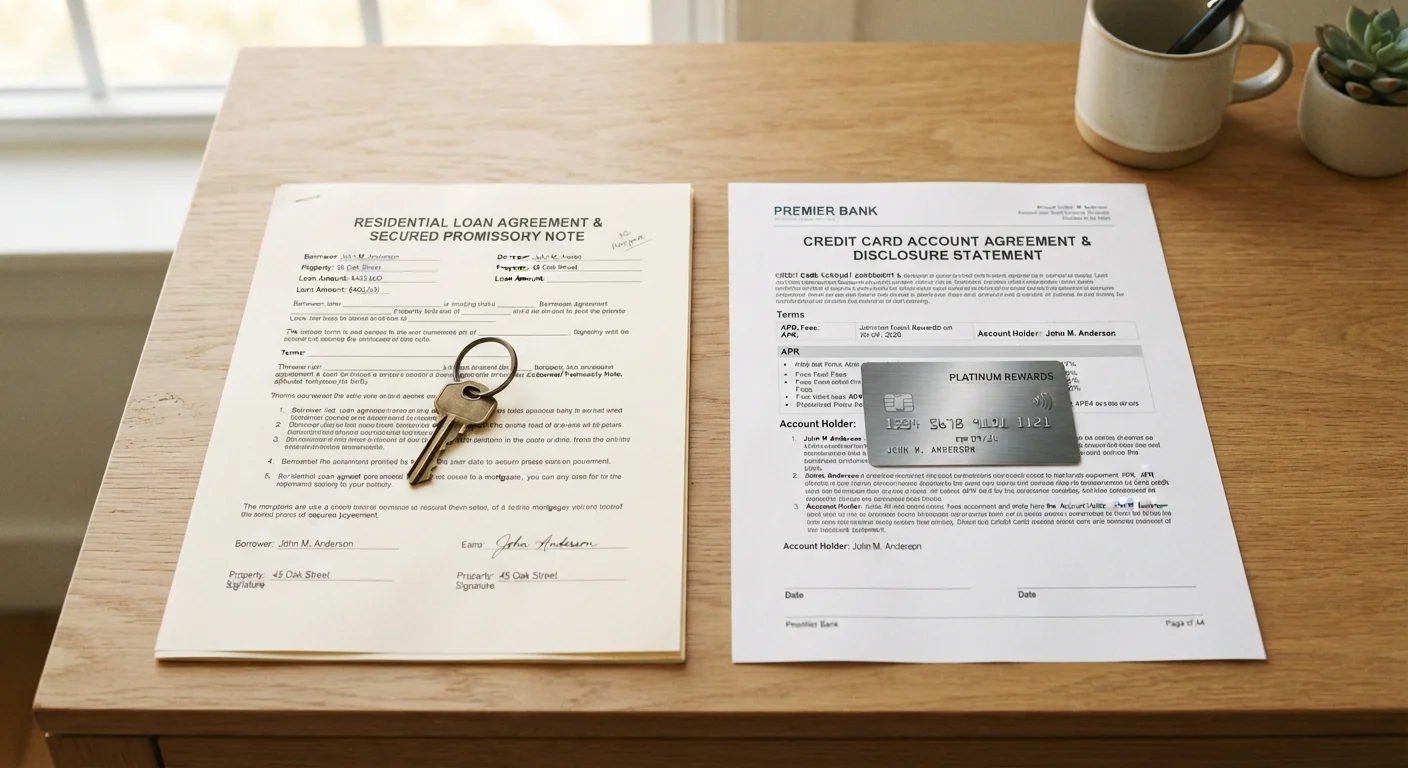
Key Takeaways
Option A
Secured Debt
Debt backed by a specific asset the lender can claim.
Best for: Borrowers who can offer collateral and want access to larger loan amounts or lower interest rates.
Option B
Unsecured Debt
Debt based solely on your creditworthiness - no collateral required.
Best for: Borrowers who need flexible credit without pledging a specific asset.
If you want to borrow a large sum and qualify for the lowest possible interest rate
Secured Debt
Lenders price secured loans lower because collateral reduces their risk. You'll generally access better terms when you can back the loan with an asset.
If you need credit without risking a specific possession
Unsecured Debt
No collateral means the lender can't directly seize property if you miss payments, though your credit and finances still face serious consequences.
If you're building a debt payoff plan and want to prioritize correctly
Secured Debt
Falling behind on secured debt faster puts housing or transportation at immediate risk, so those obligations generally warrant first attention in a repayment strategy.
If you're considering consolidation options for multiple balances
Unsecured Debt
High-interest unsecured balances like credit cards are typically the primary candidates for consolidation, since their rates have the most room to improve.
The Core Difference: Collateral
The single factor that separates secured debt from unsecured debt is collateral - a specific asset pledged to the lender as a guarantee. If you stop making payments, the lender has a legal right to take that asset to recover what you owe.
With secured debt, your loan is attached to something tangible. A mortgage is secured by your home. An auto loan is secured by your vehicle. If you default, foreclosure or repossession becomes the lender's recourse. This collateral arrangement is precisely why lenders are often willing to offer lower interest rates and longer repayment terms on secured loans - they have a fallback.
Unsecured debt works differently. The lender extends credit based on your credit history, income, and overall financial profile - not on a specific asset. Common examples include credit cards, personal loans, medical bills, and student loans. Because there's no collateral backing the debt, lenders take on more risk, and that risk is usually reflected in higher interest rates.
For a broader view of how debt types fit into your overall financial picture, see Understanding Debt and Credit: The Complete Picture.
How Each Type Behaves When You Fall Behind
The difference between secured and unsecured debt becomes most consequential when payments are missed.
| Criterion | Secured Debt | Unsecured Debt |
|---|---|---|
| Collateral required | Yes - specific asset pledged | No - based on creditworthiness |
| Typical interest rate | Generally lower | Generally higher |
| Common examples | Mortgage, auto loan | Credit card, personal loan, medical bill |
| Default consequence | Repossession or foreclosure | Credit damage, collections, possible lawsuit |
| Typical loan amounts | Often larger | Often smaller |
| Lender risk | Lower (collateral cushion) | Higher (no asset to claim) |
With secured debt, a lender's primary remedy is claiming the collateral. Miss enough mortgage payments and the lender can foreclose. Stop paying your auto loan and the vehicle can be repossessed - sometimes without advance notice, depending on your state. The asset loss can happen relatively quickly compared to other debt consequences.
With unsecured debt, lenders can't directly seize property. However, they can report missed payments to credit bureaus (damaging your credit score significantly), sell the account to a collections agency, or sue you in court. A court judgment can lead to wage garnishment or a bank account levy in many states, so "no collateral" doesn't mean "no consequences."
Student Loans Are a Special Case
Federal student loans are technically unsecured, but they come with collection tools that most unsecured debts don't - including the ability to garnish wages and tax refunds without a court judgment. Private student loans are also unsecured but handled differently. If you're managing student loan debt, check current federal guidance directly, as repayment rules and relief programs can change.
If you're weighing how to tackle multiple debts at once, the debt snowball and avalanche methods can help you build a structured repayment approach.
Interest Rates, Credit Access, and Borrowing Amounts
Collateral doesn't just change what happens when you default - it shapes the entire loan structure.
~$12.9T
Total U.S. mortgage debt outstanding
According to Federal Reserve data, mortgage debt represents by far the largest category of secured debt held by American households.
~20%+
Average credit card interest rate
The Federal Reserve has reported average credit card interest rates exceeding 20%, illustrating the cost premium common on unsecured revolving debt.
~$1.6T
Total U.S. auto loan balances
Federal Reserve data shows auto loan balances represent one of the largest categories of secured consumer debt alongside mortgage debt.
Because secured lenders can recover losses through the collateral, they typically offer lower interest rates than unsecured lenders. A home equity loan might carry a rate significantly below what a personal loan or credit card would charge for the same dollar amount. This spread can translate into meaningful savings over the life of a loan.
Secured debt also tends to allow larger borrowing amounts. Mortgages routinely reach six figures; auto loans commonly run into the tens of thousands. Unsecured personal loans from most lenders are capped at amounts that reflect the absence of collateral backing - though limits vary by lender and borrower profile.
One practical note for auto buyers: whether your loan is arranged through a dealer or a bank, it's still a secured loan with your vehicle as collateral. Dealer financing vs. bank or credit union loans explains how the source of financing affects your terms and total cost.
Making This Knowledge Work for You
Understanding which debts are secured and which are unsecured helps you make smarter decisions about borrowing and repayment.
When borrowing, ask yourself whether the lower rate offered on a secured loan is worth the risk of pledging an asset. Taking out a home equity loan to pay off credit cards, for example, converts unsecured debt into secured debt - meaning your home is now at stake for obligations that previously couldn't threaten it directly.
When managing existing debt, secured obligations generally deserve priority attention in a repayment plan because the consequences of default are more immediate and concrete. Losing your home or car can cascade into other financial and life hardships quickly.
For those dealing with significant debt loads, debt consolidation or formal relief options may be worth exploring carefully. And if things have become overwhelming, understanding how different paths compare - such as debt management plans vs. debt settlement - can help you evaluate your realistic choices without guesswork.
This article is for general informational purposes only and does not constitute personalized financial, legal, or tax advice. Consult a qualified financial professional for guidance specific to your situation.