

Home & Living

Annual Home Organization Audit: A Room-by-Room Reset Checklist

Share
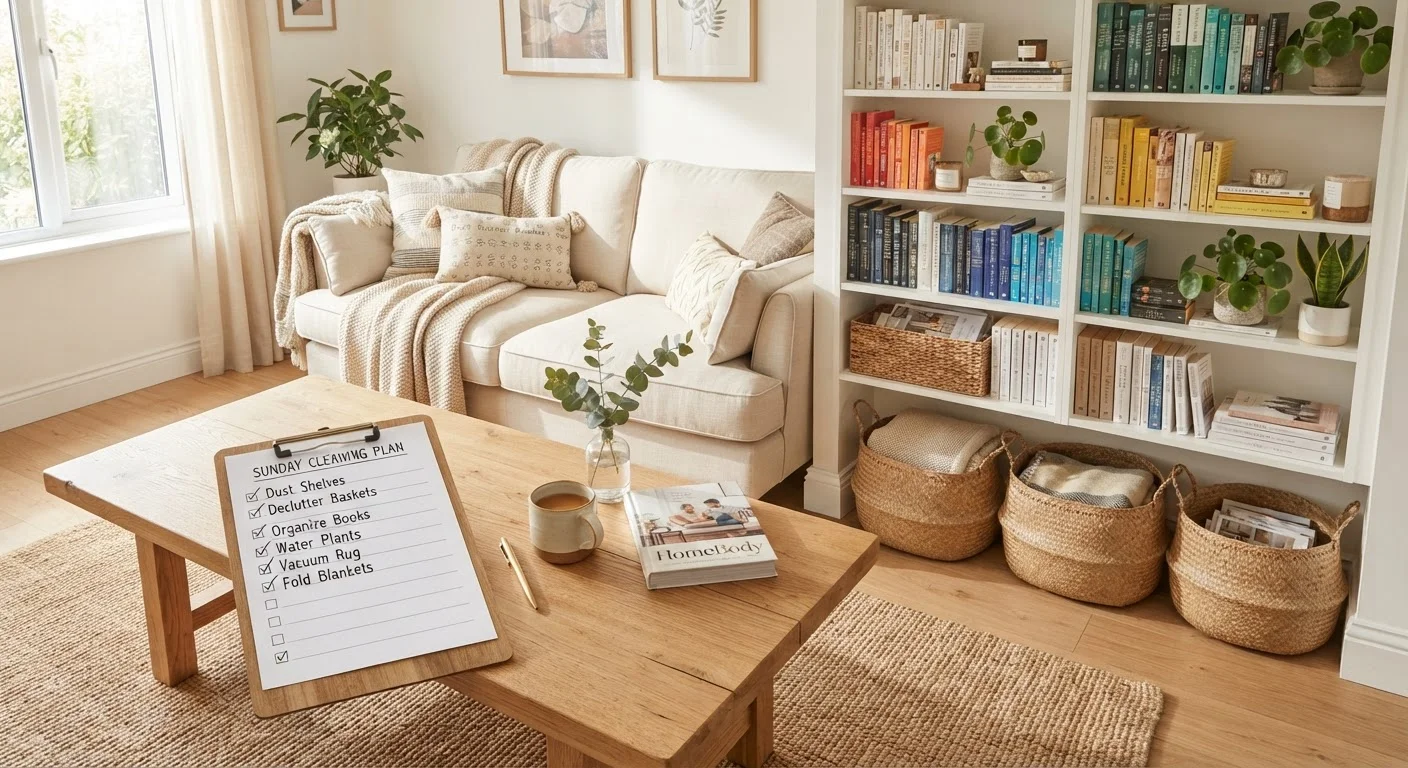
Organized living room with open baskets, tidy shelves, and a checklist on a coffee table

Key Takeaways

An annual audit catches clutter creep before it overwhelms a room's organizing system.
Each room has distinct categories worth reviewing — storage, function, and flow all matter.
Letting go of items you no longer use is just as important as adding new systems.
Consistent habits after the audit keep results lasting all year long.
You don't need to overhaul everything — small corrections in each room add up significantly.
90–180 min

Summary

28 items · 1.5–3 hours

Why an Annual Audit Works Better Than Reactive Decluttering

Most households don't fall into chaos overnight. Clutter accumulates gradually — a junk drawer that expands, a closet that stops closing, a garage where the car no longer fits. By the time the problem is obvious, the fix feels overwhelming.

An annual home organization audit interrupts that cycle. By walking every room once a year with a structured checklist, you catch small breakdowns early, reassess which systems are actually working, and make intentional decisions about your space rather than reactive ones.

This audit pairs naturally with other yearly reviews. If you're already thinking about your household spending, the monthly household budget checklist is a useful companion — organizing your space and your finances at the same time prevents both from slipping. Similarly, if you're planning a move in the near future, decluttering before a move is the right starting point before this audit.

Set aside a weekend morning. Bring a notepad, three bins (keep, donate, discard), and this checklist. Work one room at a time.

Required

Three sorting bins or bags

Separate items into keep, donate, and discard piles as you move through each room.

Required

Notepad or phone notes app

Record follow-up tasks, items to replace, and organizing products to research later.

Optional

Labeler or masking tape and marker

Re-label bins, shelves, or drawers that have lost their original organization logic.

Optional

Measuring tape

Measure shelves or spaces where you're considering adding organizers or storage containers.

Required

Trash bags (heavy-duty)

Haul out discarded items quickly without multiple trips.

Room-by-Room Reset Checklist

Work through each room in sequence. Check off items as you go — note anything that needs a follow-up purchase, repair, or a deeper session later. The goal isn't perfection; it's an honest assessment of what's working and what isn't.

Kitchen & Pantry

Pull everything out of one cabinet or drawer at a time and remove items that are expired, broken, or unused in the past year. Must
Check that food storage containers have matching lids — discard any that don't. Should
Assess your pantry layout: are everyday staples at eye level and easy to reach? Should
Clear the countertops of appliances you rarely use and store them out of sight. Nice to have

Living Room & Common Areas

Empty every basket, bin, and decorative box — remove items that migrated in from other rooms. Must
Evaluate media, books, and magazines: donate anything unread or unwatched for more than a year. Should
Untangle or discard old cords and cables that don't connect to any current device. Should
Check that every item in this space has a defined home — floating objects create visual clutter. Must

Bedrooms & Closets

Go through all clothing and remove anything that doesn't fit, is damaged beyond repair, or hasn't been worn in over a year. Must
Review the under-bed storage if present — remove seasonal items that are now out of season. Should
Check nightstand drawers and clear out items that belong elsewhere. Should
Reorganize closet by category (type, then season) so retrieval is intuitive year-round. Nice to have

Bathrooms

Dispose of expired medications, skincare, and cosmetics — check the manufacturer's expiration dates. Must
Pare down duplicate products: consolidate or discard half-used bottles of the same item. Should
Reassess under-sink storage — remove items that don't belong in the bathroom. Should

Home Office & Paper Files

Shred or recycle documents you no longer need to retain — follow standard retention guidelines for financial and legal records. Must
Digitize important documents that would be difficult to replace if lost in a disaster. Should
Clear desk surfaces and return non-office items to their correct rooms. Must
Audit digital files too — delete or archive folders that are outdated or redundant. Nice to have

Garage, Basement & Storage Areas

Identify and remove any items stored 'temporarily' more than six months ago — temporary often means never. Must
Check that hazardous materials (paints, solvents, pesticides) are stored safely and dispose of old ones through your municipality's hazardous waste program. Must
Verify that seasonal equipment (lawn tools, holiday decorations) is clearly labeled and logically grouped. Should
Note any home maintenance items discovered during the audit and add them to your maintenance schedule. Should

Don't try to complete the audit in one session

Attempting all rooms in one day often leads to partially finished projects that are harder to recover from than the original clutter. Schedule one or two rooms per session if your schedule is tight. A partially completed audit you return to is far more useful than a rushed one.

Once your audit is complete, the habits that keep organized homes organized are what make your results last. A one-time reset fades quickly without small, consistent routines anchoring it.

For paper-based clutter specifically — one of the most common problem areas — see our guide to what paper to keep, shred, or scan. And if your kitchen pantry is part of your audit concern, the pantry audit checklist covers nutritional gaps alongside organization.

Dispose of medications safely

Do not flush medications down the drain or throw them in household trash unless the label specifically directs it. Many pharmacies and local law enforcement agencies participate in drug take-back programs — check with your local municipality for drop-off locations. Improper disposal can affect water supplies and poses risks if found by children or pets.

Home & Living Editorial Team is the collective byline for our editorial team and contributor network. Articles published under this byline or an editorial pen name are researched, written, and reviewed according to our editorial standards for clarity, consistency, and independence before publication.

View all articles by Home & Living Editorial Team →
Disclaimer: The content on this site is for informational purposes only and is not a substitute for professional advice. Always consult a qualified professional for guidance specific to your situation.