

| Leading cause of house fires | Electrical failures and malfunctions (U.S. Fire Administration, general fire cause data) |
| Age at which panels warrant evaluation | 25-40+ years old (General electrician industry guidance) |
| Work typically requiring a permit | New circuits, panel upgrades, service changes (Varies by jurisdiction; verify locally) |
| DIY-safe vs. licensed work | Replacing a switch cover: DIY. Replacing wiring: licensed electrician. (National Electrical Code framework) |
| Grounding requirement | All modern outlets in US homes should be grounded (3-prong) (National Electrical Code (NEC)) |
Why Electrical Warning Signs Matter
Most homeowners notice something odd - a light that flickers, an outlet that sparks, a breaker that trips once and then holds - and file it away as a minor quirk. But electrical problems don't follow the same logic as a leaky faucet. Unlike a drip that stays contained, an electrical fault can escalate into a fire or shock hazard without much visible warning.
Understanding which symptoms are genuinely urgent versus which reflect a simple, safe fix is the first step toward protecting your household. Just as you'd weigh the risks before attempting any plumbing repair - see our guide on what's safe to DIY vs. what isn't - the same deliberate thinking applies to electrical work, where the stakes are often higher.
| Leading cause of house fires | Electrical failures and malfunctions (U.S. Fire Administration, general fire cause data) |
| Age at which panels warrant evaluation | 25-40+ years old (General electrician industry guidance) |
| Work typically requiring a permit | New circuits, panel upgrades, service changes (Varies by jurisdiction; verify locally) |
| DIY-safe vs. licensed work | Replacing a switch cover: DIY. Replacing wiring: licensed electrician. (National Electrical Code framework) |
| Grounding requirement | All modern outlets in US homes should be grounded (3-prong) (National Electrical Code (NEC)) |
Symptoms That Signal a Licensed Electrician Is Needed
The following warning signs go beyond normal wear and should prompt a call to a licensed electrician rather than a DIY investigation:
- Frequent breaker trips: A breaker that trips repeatedly on the same circuit suggests the circuit is overloaded or there's a wiring fault - not a defective breaker to simply swap out yourself.
- Persistent flickering or dimming lights: Occasional flicker when an appliance starts is normal. Flickering that's constant, widespread, or accompanied by buzzing points to a loose connection, overloaded panel, or utility-side problem.
- Burning smell or discolored outlets: Any scorch marks around outlets, a burning plastic odor, or warm switch plates indicate arcing or overheating. Treat this as an urgent situation.
- Outlets that spark visibly or feel warm: Brief sparks when plugging in a device can be normal, but persistent sparking, large sparks, or warmth to the touch are not.
- Shocks from outlets or switches: Even mild tingling when touching a switch is abnormal and can point to improper grounding or a wiring fault.
- Lights or appliances running at variable intensity: If some devices seem stronger or dimmer than usual across different circuits, you may have a problem with the neutral wire - a potentially serious panel-level issue.
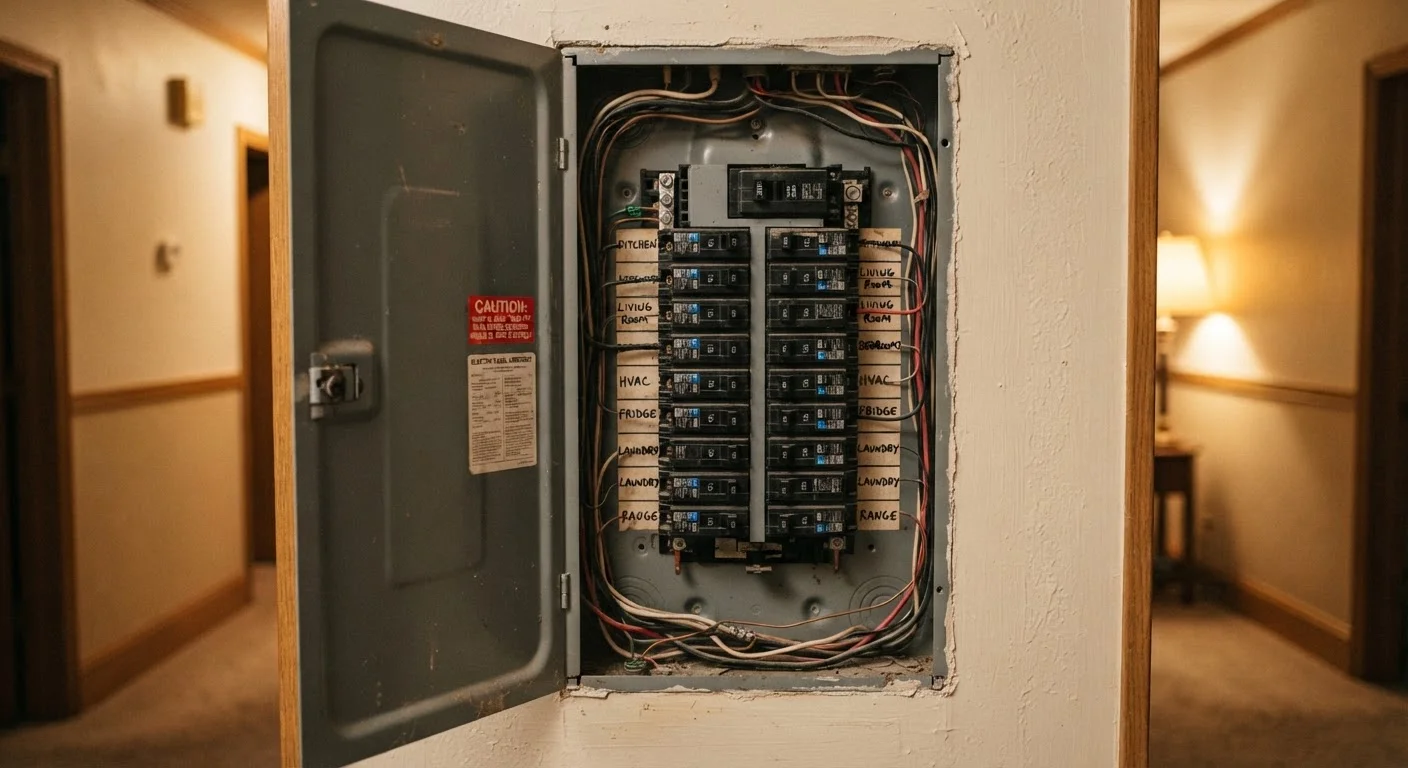
- A panel that's over 25-40 years old or uses fuses: Older panels, particularly certain brands associated with recalled equipment, may not meet current safety codes. Have a licensed electrician evaluate them.
Permits Protect You as a Homeowner
In most US states and municipalities, electrical repairs beyond simple fixture swaps require a permit and inspection. This isn't just red tape - inspections catch dangerous wiring mistakes before they become fire hazards. Always ask your electrician whether a permit is needed, and verify with your local building department if unsure.
Many homeowners underestimate how much electrical work is regulated. Before assuming a repair is a straightforward DIY task, review common misconceptions about DIY electrical work to understand where the real risks lie.
Circuit breaker
A safety device in your electrical panel that automatically shuts off power to a circuit when it detects an overload or fault. Unlike a fuse, it can be reset rather than replaced after it trips.
Arcing
An electrical discharge that jumps between conductors or between a conductor and a nearby surface. Arcing generates intense heat and is a primary cause of electrical fires.
Grounding
A safety feature that provides a direct path for fault current to travel safely to the earth, reducing the risk of electric shock. Ungrounded outlets lack this protection.
GFCI outlet
A Ground Fault Circuit Interrupter outlet that monitors current flow and shuts off power within milliseconds if it detects a ground fault. Required by code in kitchens, bathrooms, and outdoor areas.
Service panel
The main electrical distribution board in a home, commonly called the breaker box or fuse box, where power from the utility enters and is divided into individual circuits.
What to Do Before the Electrician Arrives
If you notice a serious symptom - burning smell, visible scorching, or repeated sparking - shut off the circuit at your breaker panel and unplug devices on that circuit. Do not attempt to open outlets, junction boxes, or the panel itself.
For less urgent symptoms, document what you observe: which outlets or switches are affected, when it happens, and whether it correlates with specific appliances running. This information helps an electrician diagnose the problem faster and more accurately.
When hiring, verify the electrician holds a current state license and carries liability insurance. Ask whether the scope of work requires a permit - in most US jurisdictions, significant electrical work does. Unpermitted work can create complications if you sell the home or file an insurance claim.
This article is for general informational purposes only and is not a substitute for advice from a licensed electrician. Always consult a qualified professional for electrical diagnosis and repair in your home.