

Key Takeaways
Why Electrical Myths Are Genuinely Dangerous
DIY enthusiasm is a healthy instinct for homeowners - patching drywall, painting a room, or replacing a faucet aerator are all reasonable weekend projects. Electrical work occupies a different category. Because the consequences of a wiring mistake can be invisible for months before causing a house fire or electrocution, misconceptions in this space carry outsized risk.
This article addresses the most common myths we hear from homeowners before they pick up a wire stripper, and explains what the evidence - and your local electrical code - actually says. For a broader look at which home systems signal trouble, see our guide on signs your home's electrical system needs a professional look.
Electrical Work Can Affect Your Insurance Coverage
Many homeowner's insurance policies include clauses that allow claims to be denied if damage resulted from unpermitted or non-code-compliant electrical work. Before starting any project that goes beyond simple fixture replacement, confirm what your local code requires and whether a permit is needed. A single missed step can leave you financially unprotected in the event of a fire or electrical damage.
The Myths - and What's Actually True
Below are some of the most persistent misconceptions about residential electrical work, each corrected with the facts homeowners need before starting any project.
Myth
If I flip the light switch off, the wires are safe to touch.
Fact
A switch only breaks one side of the circuit - the wires behind the switch plate can still be live.
In standard US wiring, a switch interrupts the hot (black) wire, but the neutral and sometimes additional hot conductors remain energized at the box. The only way to confirm a wire is de-energized is to turn off the correct breaker at the panel and verify with a non-contact voltage tester. Assuming a switch makes wires safe is one of the most common causes of DIY electrical injuries.
Myth
Electrical permits are just a money grab - they don't actually matter for small jobs.
Fact
Permits exist to trigger inspections that catch dangerous wiring before it causes fires or fatalities.
Most US jurisdictions require permits for any work beyond simple fixture swaps. An unpermitted circuit that later causes a fire can result in a denied homeowner's insurance claim and personal liability. Permit requirements vary by municipality, so checking with your local building department before starting is always the correct first step - not an optional formality.
Myth
Electrical work is basically the same whether the house is old or new.
Fact
Older homes may have aluminum wiring, knob-and-tube systems, or undersized panels that change the rules entirely.
Homes built before the 1970s may contain wiring systems that require special connectors, different techniques, and often professional remediation. Aluminum wiring, for instance, expands and contracts differently than copper and requires compatible devices marked AL/CU or CO/ALR. Connecting standard copper-rated devices to aluminum wiring is a recognized fire hazard. If your home predates 1980, have a licensed electrician assess the system before any DIY work.
Myth
As long as the breaker doesn't trip, the wiring must be correct.
Fact
Breakers protect against overcurrent - they do not detect loose connections, wrong wire gauges, or reversed polarity.
A breaker that never trips can coexist with a loose wire nut that arcs intermittently, a reversed hot-neutral connection that energizes the neutral side of a circuit, or wire gauge too light for the load. Each of these faults can cause fires or shock hazards. The absence of a tripped breaker is not a wiring safety certificate.
Myth
You only need a GFCI outlet in bathrooms.
Fact
The National Electrical Code (NEC) requires GFCI protection in kitchens, garages, outdoor areas, crawlspaces, and other locations as well.
Ground Fault Circuit Interrupter (GFCI) protection requirements have expanded significantly over successive NEC editions. Kitchens, unfinished basements, garages, outdoor receptacles, and areas near water sources are all typically covered. Because local jurisdictions adopt NEC editions on their own schedule, the required locations in your home may differ slightly - consult a licensed electrician or your local building department for the rules that apply to your address.
What Homeowners Can Reasonably Do Themselves
None of this means every electrical task is off-limits. Replacing a like-for-like light fixture on an existing circuit, swapping a standard outlet cover plate, or resetting a tripped GFCI outlet are tasks most careful adults can handle safely - provided the circuit breaker is confirmed off at the panel and tested with a non-contact voltage tester before touching any wire.
The distinction to keep in mind: work that involves the service panel, adding new circuits, running new wire through walls, or changing the rating of an existing circuit almost always requires a licensed electrician and a permit in the United States. This is true whether you rent or own. Home maintenance guidance consistently emphasizes that knowing your limits is itself a maintenance skill.
Never Work on a Live Circuit
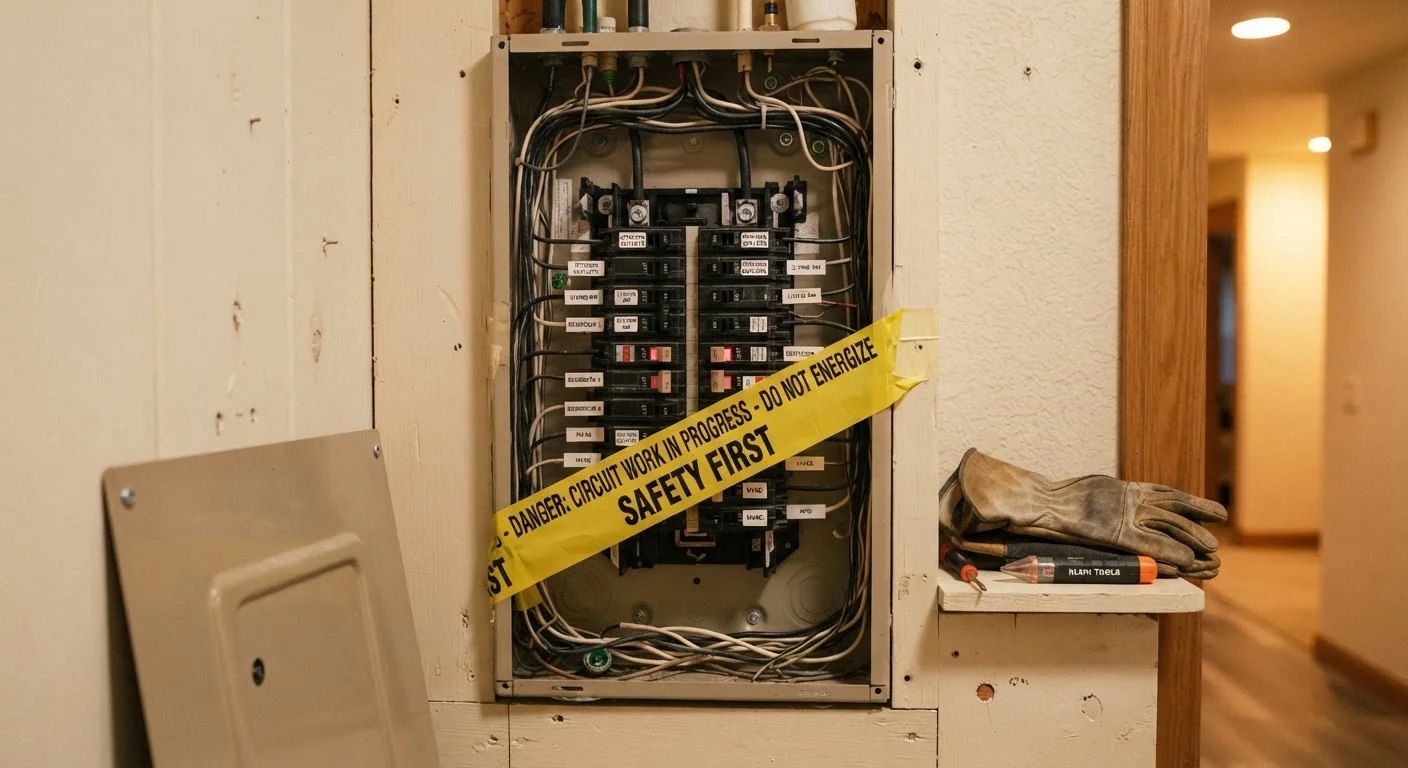
Always turn off the circuit at the breaker panel - not just at the switch - and confirm the wires are de-energized with a non-contact voltage tester before touching anything. Voltage testers are inexpensive and widely available at hardware stores. Skipping this step is the leading cause of DIY electrical injuries.
This article is for general informational purposes only and is not a substitute for advice from a licensed electrician. Always verify local permit and code requirements with your municipality before beginning any electrical project.