

Key Takeaways
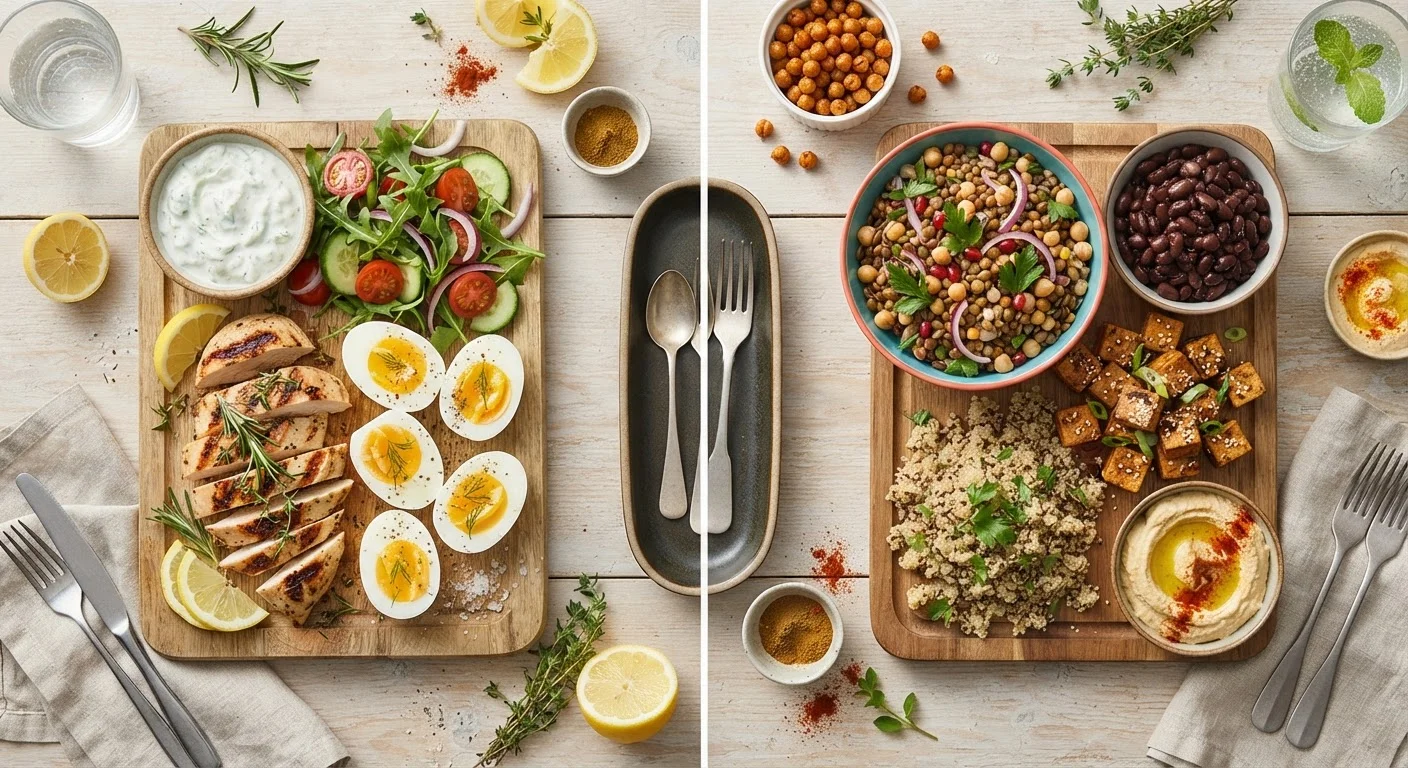
Option A
Animal Proteins
The complete, highly bioavailable protein standard.
Best for: People seeking efficient delivery of all essential amino acids from single food sources, including meat, fish, eggs, and dairy.
Option B
Plant Proteins
The fiber-rich, nutrient-dense, versatile alternative.
Best for: People pursuing more plant-forward diets who want to build complete protein intake through varied food combinations like legumes, grains, nuts, and soy.
If you want the most efficient single-source complete protein
Animal Proteins
Eggs, fish, poultry, and dairy deliver all essential amino acids with high digestibility scores, making it straightforward to meet needs without extensive meal planning.
If you prefer a more plant-forward or vegetarian eating pattern
Plant Proteins
Combining legumes, whole grains, nuts, and soy across the day can meet protein requirements while also delivering fiber, phytonutrients, and lower saturated fat.
If you want to reduce environmental impact without eliminating all animal foods
Plant Proteins
Emphasizing plant proteins-even partially-can reduce dietary footprint while strategic use of eggs or dairy fills any amino acid gaps.
If you are an older adult concerned about muscle maintenance
Animal Proteins
Leucine-rich animal sources like dairy and poultry are well-studied for supporting muscle protein synthesis, which becomes more important with age. Always consult a healthcare professional for personalized guidance.
What Makes a Protein 'Complete'?
Protein is made up of amino acids - nine of which are considered essential, meaning the body cannot synthesize them and must obtain them through food. A protein source is called complete when it contains all nine in adequate proportions.
Animal proteins - including meat, poultry, fish, eggs, and dairy - are complete proteins. Most plant proteins, such as those found in beans, lentils, rice, or nuts, are considered incomplete because they are low in at least one essential amino acid. Notable exceptions include soy (tofu, edamame, tempeh) and quinoa, which are nutritionally complete plant-based sources.
This doesn't mean plant proteins are inadequate. Research supports that eating a variety of plant protein foods throughout the day - for instance, rice and beans, or peanut butter on whole-grain bread - can supply all essential amino acids without requiring precise pairing at every single meal. For a broader view of how this fits into full eating patterns, see popular diet patterns compared.
Bioavailability: Not All Protein Is Absorbed Equally
How much protein your body actually uses depends on more than the grams listed on a nutrition label. Bioavailability refers to the proportion of a nutrient that is digested, absorbed, and made available for use. Animal proteins generally score higher on digestibility indices, partly because they lack the fiber and antinutrients - such as phytates and tannins - found in some plant foods that can interfere with protein absorption.
~1.0
DIAAS score of whole eggs
The Food and Agriculture Organization of the United Nations identifies whole eggs as a reference-quality protein with a near-perfect Digestible Indispensable Amino Acid Score.
0.52-0.64
Typical DIAAS range for wheat
Wheat-based foods score notably lower on digestibility indices than animal proteins, reflecting both amino acid profile and digestibility differences, per FAO protein quality research.
~91%
Protein digestibility of soy protein isolate
Soy protein isolate demonstrates digestibility approaching that of animal proteins, making it one of the highest-quality plant protein options available, according to nutrition science literature.
Two key measurement tools help researchers compare protein quality. The PDCAAS and the newer DIAAS both assess how well a food meets human amino acid needs relative to digestibility. Eggs, whey, and beef score at or near the top on these scales. Legumes and cereals tend to score lower, though cooking methods - such as soaking, fermenting, or sprouting - can meaningfully improve plant protein digestibility. To understand how preparation and meal composition affect absorption more broadly, see this explainer on nutrient bioavailability.
Head-to-Head: Key Nutritional Differences
Beyond amino acid profiles, animal and plant proteins differ in their accompanying nutrients - which shapes how each fits into a balanced diet.
| Criterion | Animal Proteins | Plant Proteins |
|---|---|---|
| Amino acid completeness | Complete (all 9 essential AAs) | Often incomplete; soy & quinoa are exceptions |
| Digestibility (DIAAS) | Generally high (0.9-1.1+) | Moderate to high; varies by food and prep |
| Saturated fat content | Moderate to high in red/processed meats | Generally low |
| Fiber content | None | Significant in legumes and whole grains |
| Vitamin B12 | Naturally present | Absent; supplementation often needed |
| Heme iron | Present (more absorbable form) | Non-heme iron only (less absorbable) |
| Phytonutrients | Minimal | Rich and varied |
| Environmental footprint | Generally higher | Generally lower |
Animal proteins often come packaged with vitamin B12, heme iron, zinc, and creatine - nutrients that are either absent from or less bioavailable in plants. Plant proteins, on the other hand, deliver fiber, phytonutrients, and unsaturated fats, with generally lower levels of saturated fat than many meat sources. Neither profile is universally superior; the best choice depends on overall dietary context, health goals, and individual needs.
If you're exploring how plant-forward approaches differ from full vegetarianism in practical terms, this comparison of plant-forward and vegetarian diets offers useful context.
Practical Strategies for Everyday Eaters
For most healthy adults, the priority is meeting total daily protein needs consistently - not obsessing over source purity. Current general guidance from nutrition researchers suggests distributing protein intake across meals rather than concentrating it in one sitting. Spreading protein across the day supports muscle maintenance and satiety, regardless of whether the sources are animal or plant.
You Don't Have to Choose One Exclusively
Most nutrition researchers and dietitians advise against framing protein as an either/or decision. Mixed diets - those that include both animal and plant protein sources - are common across the world's healthiest populations. Flexibly combining both types gives you access to a broader range of nutrients while allowing room for personal preference, cultural tradition, and health goals.
Practical tips for mixing both approaches:
- Add legumes - lentils, chickpeas, black beans - to soups, salads, or grain bowls several times per week.
- Use eggs or Greek yogurt as fast, complete-protein breakfast anchors.
- Replace some ground meat in recipes with cooked lentils or crumbled tempeh.
- Choose whole grain options like quinoa or farro, which provide more protein per serving than refined grains.
When evaluating nutrition headlines that claim one protein type is categorically healthier, it's worth applying some critical thinking. Knowing how to assess food research can help you avoid reacting to overstated findings.
This article is for general informational and educational purposes only and is not a substitute for professional medical or dietary advice. Consult a registered dietitian or qualified healthcare provider before making significant changes to your diet, especially if you have existing health conditions.