

Key Takeaways
Option A
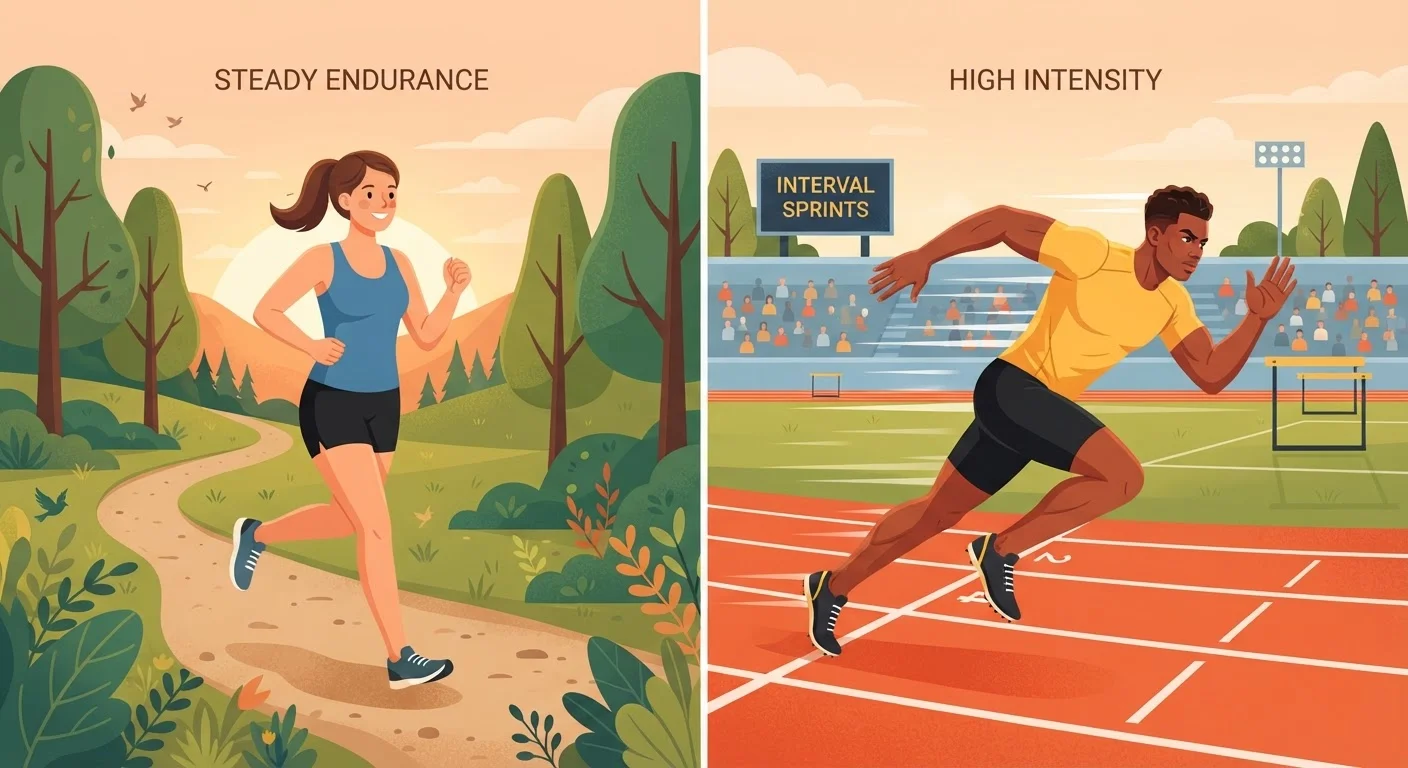
Zone 2 Training
The steady, aerobic foundation of endurance fitness.
Best for: People building long-term cardiovascular health, managing recovery, or new to consistent exercise.
Option B
HIIT (High-Intensity Interval Training)
The time-efficient, high-output approach to cardio conditioning.
Best for: People with limited workout time who want meaningful cardiovascular and metabolic benefits in shorter sessions.
If you are new to regular exercise or returning after a long break
Zone 2 Training
Low-intensity steady-state cardio builds an aerobic foundation with minimal injury risk, making it easier to stay consistent and develop a lasting habit.
If your schedule allows only two or three short workout windows per week
HIIT (High-Intensity Interval Training)
Research suggests HIIT can deliver meaningful cardiovascular and metabolic adaptations in sessions as short as 20 to 30 minutes.
If you are managing a chronic condition or recovering from injury
Zone 2 Training
Its low mechanical stress and predictable intensity make it more manageable for people with health limitations - always with professional guidance.
If you want to improve both endurance and metabolic conditioning simultaneously
A combination of both
Periodising Zone 2 and HIIT sessions throughout the week targets complementary energy systems and supports well-rounded fitness development.
If you are training for an endurance event such as a 5K or longer race
Zone 2 Training
Aerobic base development through consistent Zone 2 work underpins endurance performance, with HIIT used selectively to sharpen speed and threshold capacity.
What Each Approach Actually Means
Zone 2 training refers to exercise performed at a low-to-moderate intensity - typically around 60-70% of your maximum heart rate - where you can hold a conversation without gasping. At this effort level, the body relies predominantly on fat as fuel and keeps the aerobic energy system working efficiently for extended periods. Common Zone 2 activities include brisk walking, light jogging, cycling, and swimming at a comfortable pace.
HIIT, or high-intensity interval training, alternates brief periods of near-maximal effort with recovery intervals. A typical session might include 20-40 seconds of hard sprinting or cycling followed by 60-90 seconds of easy movement or rest, repeated several times. For a deeper breakdown of what HIIT involves and who it suits, see what HIIT actually involves.
The key distinction is intensity and the energy systems each approach primarily targets. Zone 2 trains the aerobic system almost exclusively; HIIT engages both aerobic and anaerobic pathways.
| Criterion | Zone 2 Training | HIIT |
|---|---|---|
| Intensity | Low to moderate (60-70% max HR) | High to maximal (85-100% max HR) |
| Typical session length | 45-90 minutes | 20-30 minutes |
| Primary energy system | Aerobic (fat oxidation) | Aerobic and anaerobic |
| Key adaptation | Mitochondrial density, fat metabolism | VO₂ max, cardiovascular output |
| Recovery demand | Low - can be done most days | High - needs 48+ hours between sessions |
| Injury risk | Generally low | Moderate to higher without proper base |
| Beginner suitability | High | Moderate - build a base first |
| Equipment needed | Minimal (walking, cycling) | Varies (bodyweight to gym-based) |
The Physiology: How Each Method Builds Fitness
Zone 2 training is associated with significant improvements in mitochondrial density - the number and efficiency of mitochondria in muscle cells, which are responsible for producing energy aerobically. Research in exercise physiology suggests that sustained low-intensity work is particularly effective at stimulating these cellular adaptations. This translates to better fat oxidation, improved lactate clearance, and enhanced stamina over time.
HIIT drives different but overlapping adaptations. High-intensity intervals push the cardiovascular system to work near its maximum capacity, which can improve VO₂ max - a widely used measure of aerobic fitness - efficiently and in less time. HIIT also triggers excess post-exercise oxygen consumption (EPOC), meaning the body continues burning energy at an elevated rate after the session ends, though the magnitude of this effect is often overstated in popular media.
~19%
Average VO₂ max improvement from HIIT
A meta-analysis published in the British Journal of Sports Medicine found HIIT produced approximately 19% greater VO₂ max gains compared to moderate continuous training in some populations.
3-5×
Mitochondrial stimulus from Zone 2
Exercise physiologists note that sustained aerobic work at low intensity is among the most potent stimuli for mitochondrial biogenesis, supporting long-term endurance capacity.
150 min
Weekly moderate aerobic activity recommended
U.S. Physical Activity Guidelines for Americans recommend at least 150 minutes of moderate-intensity aerobic activity per week for substantial health benefits.
Understanding how either approach fits into a broader training structure - including principles like progressive overload - is important for long-term progress. See our article on progressive overload and fitness plateaus for more context.
Practical Trade-Offs: Time, Recovery, and Accessibility
One of the most practical differences is time commitment. Zone 2 sessions are typically 45-90 minutes to accumulate meaningful aerobic stimulus. HIIT sessions are shorter - often 20-30 minutes of total work - making them appealing for busy schedules. However, HIIT demands more recovery time between sessions; doing high-intensity intervals every day raises injury risk and can lead to overtraining.
Zone 2 is generally more accessible for beginners and people managing health conditions because the intensity is controllable and the mechanical stress on joints and muscles is lower. HIIT carries a higher risk of musculoskeletal injury, particularly for those who haven't yet established a movement foundation. If you're just starting out, this beginner's guide to moving more covers how to build exercise habits safely.
Heart Rate Monitoring Can Help
Using a heart rate monitor or a wearable fitness tracker can make it easier to stay in the correct intensity zone during both Zone 2 and HIIT sessions. Zone 2 is often described as the effort level where you can speak in full sentences but would struggle to sing. For HIIT, perceived exertion should feel genuinely hard during work intervals. These are general guidelines - a fitness professional can help you determine appropriate targets for your individual fitness level.
Both approaches are compatible with home or gym settings. For a practical look at those environment trade-offs, see our comparison of home workouts versus gym training.
Which Fits Your Goals - and Can You Combine Them?
Neither approach is universally superior. The right choice depends on your current fitness level, time availability, health status, and what you actually enjoy enough to do consistently. Adherence is arguably the most important factor in any exercise program.
For most healthy adults, combining both styles across the week - for example, two or three Zone 2 sessions and one HIIT session - can target complementary physiological adaptations and reduce the monotony of doing the same type of workout repeatedly. This also aligns with how many endurance athletes and sports scientists structure training programs. For broader context on how cardio training fits alongside strength work, see cardio versus strength training.
If you have an existing health condition, are pregnant, or are new to vigorous exercise, speak with your healthcare provider before beginning either program. A qualified fitness professional can also help calibrate intensity to your individual starting point.
This article is for general informational purposes only and does not constitute medical or exercise advice. Consult a qualified healthcare professional before starting any new exercise program, particularly if you have an existing health condition.