

Key Takeaways
Our Verdict
No single Hawaiian island is objectively superior — the right choice depends entirely on what a traveler values. First-timers and those wanting convenience will likely gravitate toward Oahu or Maui, while adventure seekers, nature lovers, and those craving quiet will find Kauai, the Big Island, or Molokai more rewarding.
| Best for | Recommended |
|---|---|
| First-time visitors and urban explorers | Oahu |
| Those seeking a mix of luxury, beaches, and outdoor activity | Maui |
| Hikers, photographers, and nature purists | Kauai |
| Geology enthusiasts and adventure travelers | The Big Island |
Oahu: The Gathering Place
Oahu is Hawaii's most visited island and its political and cultural hub. Home to Honolulu, Waikiki Beach, and Pearl Harbor, it offers the widest range of accommodation, dining, and transportation of any island in the chain. The North Shore draws surfers from around the world during winter months, while Diamond Head State Monument provides a rewarding hike above the city skyline.
Oahu suits travelers who want accessibility — direct international flights, public transit, and a dense mix of historic sites and contemporary amenities. It is the most urban of the islands and, during peak periods, the most crowded. Those seeking quiet or seclusion may find the energy of Waikiki overwhelming.
Planning an Island-Hopping Trip
Inter-island travel in Hawaii is almost exclusively done by air, with flights typically ranging from 20 to 50 minutes. There is a passenger ferry between Maui and Lanai, but no regular ferry service between other islands. Build buffer time between connections, as weather and logistics can cause delays. Booking flights and accommodation well in advance is particularly important during holidays and summer months.
Maui: Valley Isle Versatility
Maui consistently ranks among the most popular Hawaiian islands for good reason: it strikes a balance between polished resort infrastructure and genuine natural spectacle. The Road to Hana winds past waterfalls and rainforest, while Haleakalā National Park offers a sunrise above the clouds that many travelers describe as a defining experience. The island's west side — anchored by Lahaina and Kā'anapali — provides calm swimming beaches and snorkeling accessible to most fitness levels.
Maui is well-suited to honeymooners, families, and travelers who want comfort without sacrificing outdoor experiences. Accommodation ranges broadly from budget-oriented condos in Kīhei to luxury resorts along the western coast.
| Oahu | Maui | Big Island | Kauai | Molokai | Lanai | |
|---|---|---|---|---|---|---|
| Tourism infrastructure | Extensive | Strong | Moderate | Moderate | Minimal | Very limited |
| Best landscape type | Urban & beaches | Beaches & summit | Volcanic & diverse | Dramatic cliffs & canyons | Sea cliffs & rural | Desert & rugged terrain |
| Ideal traveler | First-timers | Honeymooners & families | Adventure seekers | Hikers & photographers | Solitude seekers | Luxury & seclusion |
| Nightlife & dining | Vibrant | Good variety | Limited to hubs | Quiet | Very limited | Minimal |
| Direct flights from mainland | Yes | Yes | Yes | Yes | No | No |
The Big Island: Geological Wonder
Hawaii Island — commonly called the Big Island — is geologically young, actively volcanic, and strikingly varied. Within a single island, travelers can move from black-sand beaches to snow-dusted peaks on Mauna Kea, through coffee farms in Kona, and into the otherworldly lava fields of Hawaiʻi Volcanoes National Park. The park's ongoing volcanic activity (the nature and accessibility of which changes frequently — always check the National Park Service before visiting) makes it unique among American destinations.
The island's sheer size means driving distances are significant. Travelers should plan their itinerary by region — the Kona coast, Hilo side, and Kohala resorts each have a distinct atmosphere. The Big Island rewards those who enjoy self-directed exploration over packaged resort experiences.
Kauai, Molokai, and Lanai: The Quieter Choices
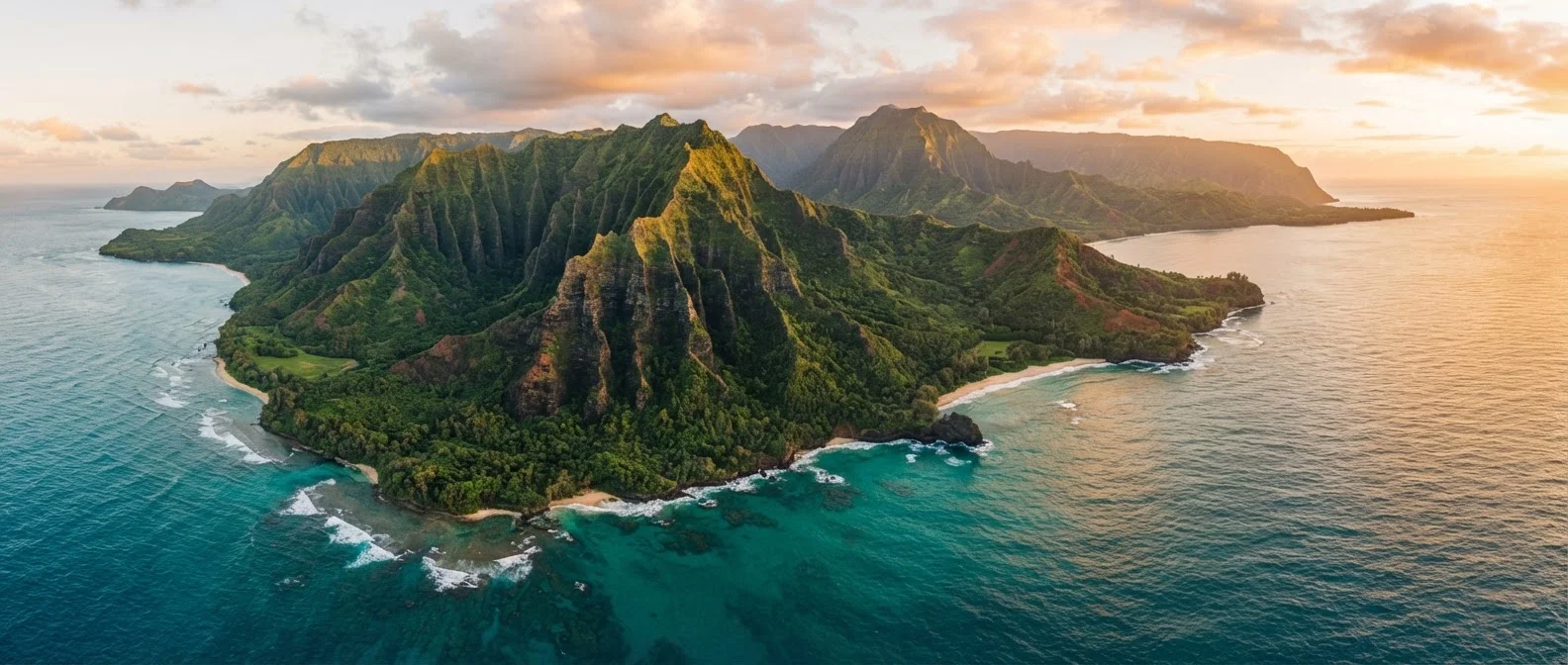
Kauai, sometimes called the Garden Isle, is the oldest and arguably most visually dramatic of the main islands. The Nā Pali Coast — a series of jagged green cliffs plunging into the ocean — is accessible by boat, air, or the demanding Kalalau Trail. Waimea Canyon, often compared in scale to the Grand Canyon, adds to the island's reputation for raw landscape. Kauai has fewer resort developments than Oahu or Maui, making it a better fit for travelers who prioritize scenery over nightlife.
Molokai is Hawaii's least commercially developed main island. It has no traffic lights, no shopping malls, and a community that has actively chosen to limit mass tourism. Travelers who visit tend to do so for the remote sea cliffs of the north shore — among the tallest in the world — and for the Kalaupapa National Historical Park, which preserves the site of a former leprosy settlement. Access to Kalaupapa requires a permit and is subject to restrictions; verify current conditions through official National Park Service channels before planning a visit.
Lanai is a small island with a remarkably quiet atmosphere. Most of its visitors arrive by ferry from Maui or by private air. The island offers rugged four-wheel-drive terrain, two distinctive resort properties, and very limited commercial development. It appeals to travelers seeking an intimate, unhurried experience away from the typical tourism circuit.
~10,000 sq mi
Total land area of Hawaiian archipelago
The Hawaiian Islands span a vast stretch of the North Pacific, with the Big Island alone accounting for roughly 63% of the state's total land area.
5
National Parks across Hawaii's islands
Hawaii hosts five units of the National Park System, including Hawaiʻi Volcanoes, Haleakalā, and Kalaupapa, spread across multiple islands.