

Key Takeaways
Battery Degradation
Battery degradation is the gradual, permanent loss of a rechargeable battery's ability to hold a full charge. It happens naturally through chemical changes inside the battery - not just from heavy use, but from time itself. The result is shorter runtimes and, eventually, a device that can't hold a useful charge at all.
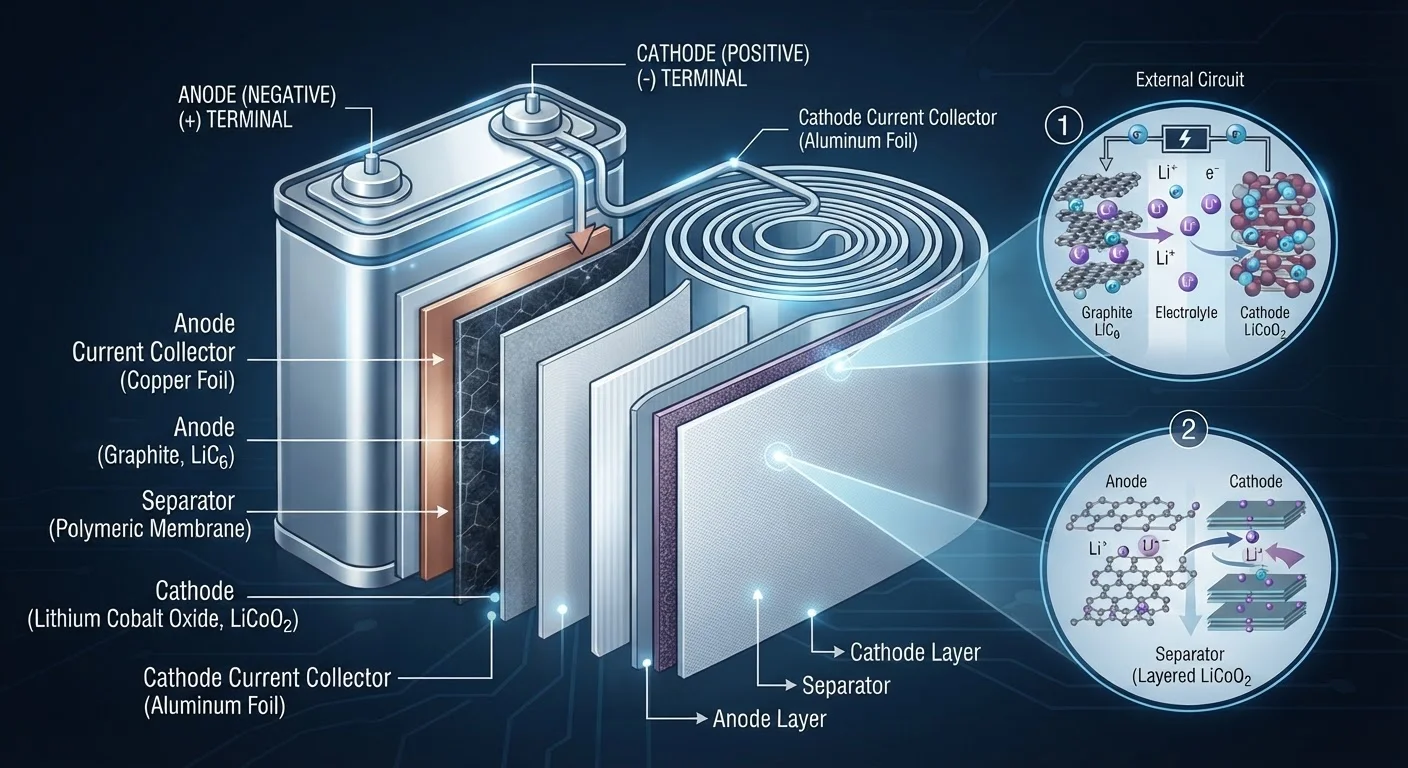
In lithium-ion cells, degradation is driven by lithium plating, electrolyte decomposition, and the growth of a resistive layer called the Solid Electrolyte Interphase (SEI) on the anode.
What's Actually Happening Inside a Lithium-Ion Battery
Every rechargeable battery in your phone, laptop, or tablet relies on lithium ions moving back and forth between two electrodes - the anode and the cathode - through a liquid or gel called the electrolyte. When you charge the device, ions flow to the anode; when you use it, they flow back to the cathode, releasing energy in the process.
The problem is that this movement is never perfectly clean. With each cycle, tiny amounts of lithium get permanently trapped and can no longer participate in energy storage. Simultaneously, a resistive layer called the Solid Electrolyte Interphase (SEI) slowly grows on the anode surface, making it harder for ions to pass through efficiently. Over time, both effects compound: fewer active ions, higher internal resistance, and a battery that holds less and delivers less.
This isn't a manufacturing defect - it's fundamental electrochemistry. Even the best-made cells follow this trajectory.
~80%
Capacity retained after 300-500 full charge cycles
This is a widely cited benchmark used by major device manufacturers in their battery specification documentation.
95°F
Temperature above which battery aging accelerates significantly
Battery researchers and device makers consistently identify sustained heat above this threshold as a primary driver of lithium-ion degradation.
20-80%
Optimal charge range to slow battery aging
Keeping lithium-ion batteries within this range reduces electrochemical stress on both the anode and cathode over time.
Why Heat Accelerates the Process
If there is one environmental factor that shortens battery life faster than anything else, it is heat. High temperatures speed up the chemical reactions inside the cell, including the ones you don't want - faster SEI growth, faster electrolyte breakdown, and a phenomenon called lithium plating, where lithium deposits unevenly on the anode and becomes permanently inactive.
Practical heat sources are easy to overlook: leaving a phone on a car dashboard on a sunny day, running processor-intensive apps for extended periods, or charging a device inside a case that traps heat. Sustained exposure to temperatures above roughly 95°F (35°C) can accelerate degradation meaningfully compared to keeping a device at room temperature.
Keep Your Device Cool While Charging
Remove thick cases when charging for long periods, and avoid placing your device on soft surfaces like beds or couches that trap heat underneath. Charging in a cool room rather than in direct sunlight makes a meaningful difference in long-term battery health.
Cold temperatures create a different but temporary problem - a battery may appear to have far less capacity in freezing conditions, but this effect largely reverses once the device warms up. Heat damage, by contrast, is permanent.
How Charge Levels Affect Aging
The state of charge at which a lithium-ion battery sits when not in use also matters. At very high charge levels - consistently at or near 100% - the cathode material is under chemical stress. At very low levels - consistently near 0% - a different set of degradation reactions accelerates. Electrochemists refer to this as the battery being in a state of deep discharge stress.
Keeping a battery in the middle range, roughly 20% to 80%, reduces this stress. This is why many newer operating systems offer optional features that deliberately slow charging to avoid sitting at 100% for hours. It's not a gimmick - there's genuine science behind the recommendation.
For more on how everyday habits interact with device health, the common myths about charging overnight article addresses several widely held misconceptions with a close look at the evidence.
Time Degrades Batteries Even Without Use
Many people assume that a device sitting in a drawer is preserving its battery. In reality, lithium-ion batteries continue to age in storage. The SEI layer still grows - more slowly, but steadily. Electrolyte components still slowly decompose. A device stored for two years and never charged will have noticeably less capacity than the same device fresh from the factory.
For long-term storage, manufacturers generally recommend keeping the battery at around 50% charge in a cool, dry environment. Storing at full charge in a warm location is one of the fastest ways to age an unused battery.
Understanding why your battery behaves the way it does is part of using your devices confidently. For a broader look at keeping your tech running well, see our guide on keeping your devices secure without becoming a tech expert.
This article is for general informational and educational purposes only. Battery performance varies by device, manufacturer, and individual usage patterns.