

Key Takeaways
Our Verdict
Both zero-based and percentage-based budgeting are legitimate, proven frameworks for managing personal spending. Zero-based budgeting suits detail-oriented people who want precise control over every category. Percentage-based budgeting works well for those who prefer a simpler, lower-maintenance structure that still keeps spending in check.
| Best for | Recommended |
|---|---|
| People who want maximum visibility into every spending category | Zero-Based Budgeting |
| Beginners or those with limited time for monthly financial admin | Percentage-Based Budgeting |
| Those with irregular or variable income needing month-to-month flexibility | Zero-Based Budgeting |
| Households with stable salaries looking for a simple, sustainable system | Percentage-Based Budgeting |
How Each Method Actually Works
Before comparing the two, it helps to understand what each approach actually asks you to do with your paycheck.
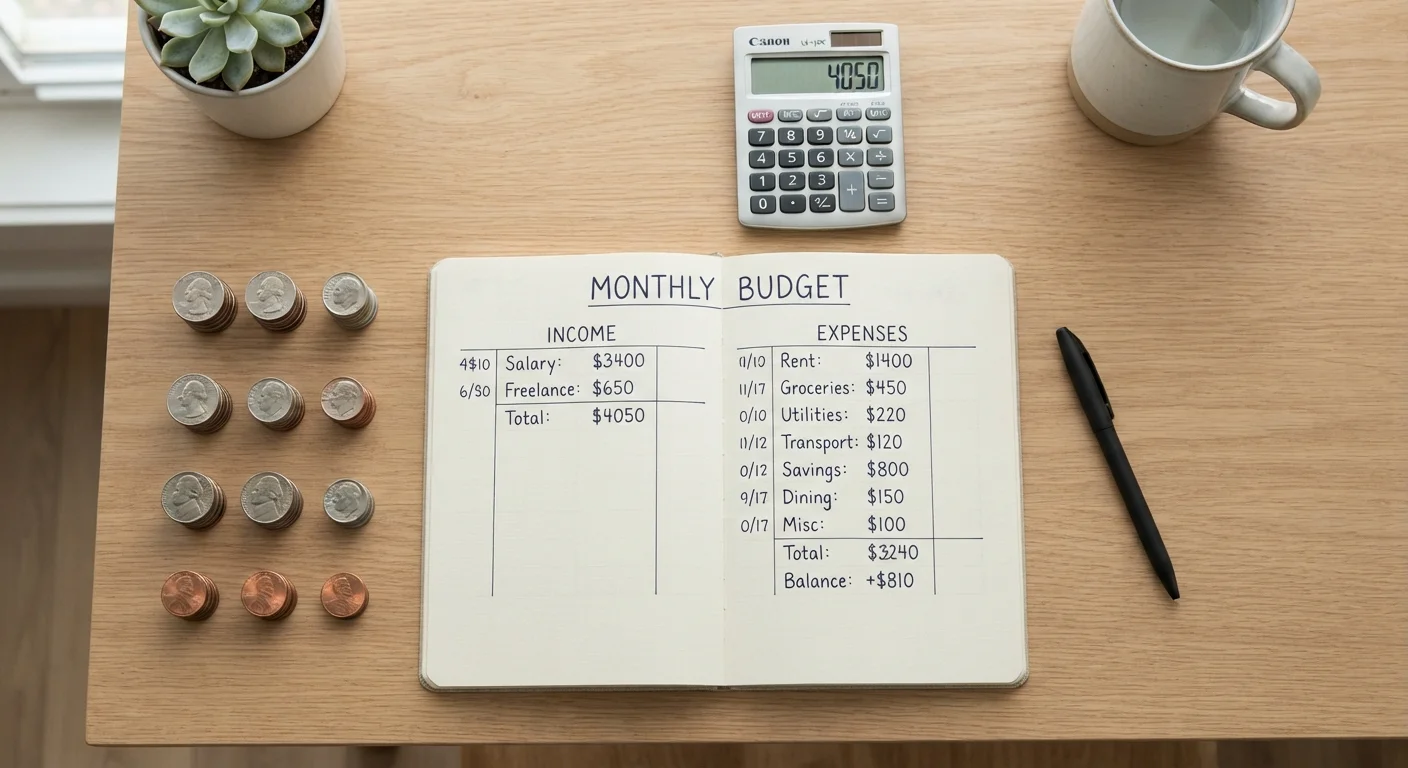
Zero-based budgeting (ZBB) means your income minus your planned expenses equals zero at the end of the month. Every dollar is assigned a category - rent, groceries, savings, debt payments, entertainment - until nothing is left unaccounted for. If you earn $4,000 a month, your budget categories must collectively add up to exactly $4,000. Unspent money in one category gets intentionally moved elsewhere rather than just sitting idle.
Percentage-based budgeting works differently. Instead of itemizing every expense, you divide your income into broad buckets using fixed ratios. The most common version is the 50/30/20 framework: roughly 50% of take-home pay goes toward needs, 30% toward wants, and 20% toward savings and debt repayment. You don't have to specify every line item within each bucket - the percentages do the heavy lifting. For a deeper look at how that framework holds up in practice, see The 50/30/20 Rule: What It Gets Right and Where It Falls Short.
Both systems start from the same place: your actual take-home income. Where they diverge is in how granular they get after that.
Side-by-Side Comparison
Here's how zero-based and percentage-based budgeting stack up across the criteria that matter most for everyday budgeters.
| Zero-Based Budgeting | Percentage-Based Budgeting | |
|---|---|---|
| Core concept | Every dollar assigned a specific job | Income split into broad percentage buckets |
| Monthly time commitment | Higher - rebuilt from scratch each month | Lower - ratios stay consistent month to month |
| Level of detail | Granular, category by category | Broad buckets, less itemization |
| Best for irregular income | Yes - adapts to income changes monthly | Less flexible for variable paychecks |
| Learning curve | Steeper, especially at first | Gentler, easier to start quickly |
| Unspent money handling | Intentionally reassigned to another category | May go untracked within the bucket |
| Useful tools | Spreadsheet or envelope-style app | Basic calculator or budgeting app |
The table above captures the structural differences, but the right fit depends heavily on your habits and how much time you're realistically willing to spend each month on financial tracking.
The Real Trade-Offs to Consider
Zero-based budgeting gives you more control - and demands more effort. You'll revisit your budget at the start of every month, rebuilding categories from scratch rather than assuming last month's numbers carry over. This is genuinely useful when your expenses fluctuate or when you're trying to eliminate debt aggressively. The downside: it takes real time, and skipping even one month can throw off the whole system.
Try a Hybrid Approach
You don't have to choose strictly one method. Some people use percentage-based ratios to set overall guardrails, then apply zero-based logic within their "needs" bucket to itemize rent, utilities, and groceries precisely. This hybrid can give you meaningful control without requiring a full monthly rebuild of every category.
Percentage-based budgeting is lower maintenance, but it can mask problems. Because it works at the bucket level, you might technically stay within your "needs" percentage while still overspending on, say, subscriptions - just offset by underspending somewhere else. For people who want a budget that runs in the background without requiring weekly attention, that trade-off is often acceptable.
If you have irregular income - freelance work, hourly shifts, seasonal employment - zero-based budgeting can actually be more practical because you're rebuilding the budget each month based on what you actually earned. The guide to budgeting on irregular income covers this scenario in more detail.
Getting Started With Either Approach
Whichever method you choose, the starting point is the same: know your actual take-home income and your recurring monthly expenses. If you've never built a formal budget before, Your First Monthly Budget, Built from Scratch walks through the setup without requiring spreadsheets or financial expertise.
Before finalizing any budget, it's also worth running through a household expense checklist - it's easy to forget annual fees, quarterly insurance payments, or small subscriptions that don't appear every single month. The room-by-room household budget checklist helps surface those overlooked costs before they become surprises.
Neither system will work if the numbers you're working with don't reflect reality. Honest tracking - even for just 30 days before you start - makes either approach significantly more effective.
This article is for general informational and educational purposes only and does not constitute personalized financial advice. For guidance specific to your situation, consider consulting a licensed financial professional.