

Key Takeaways
The Envelope Method
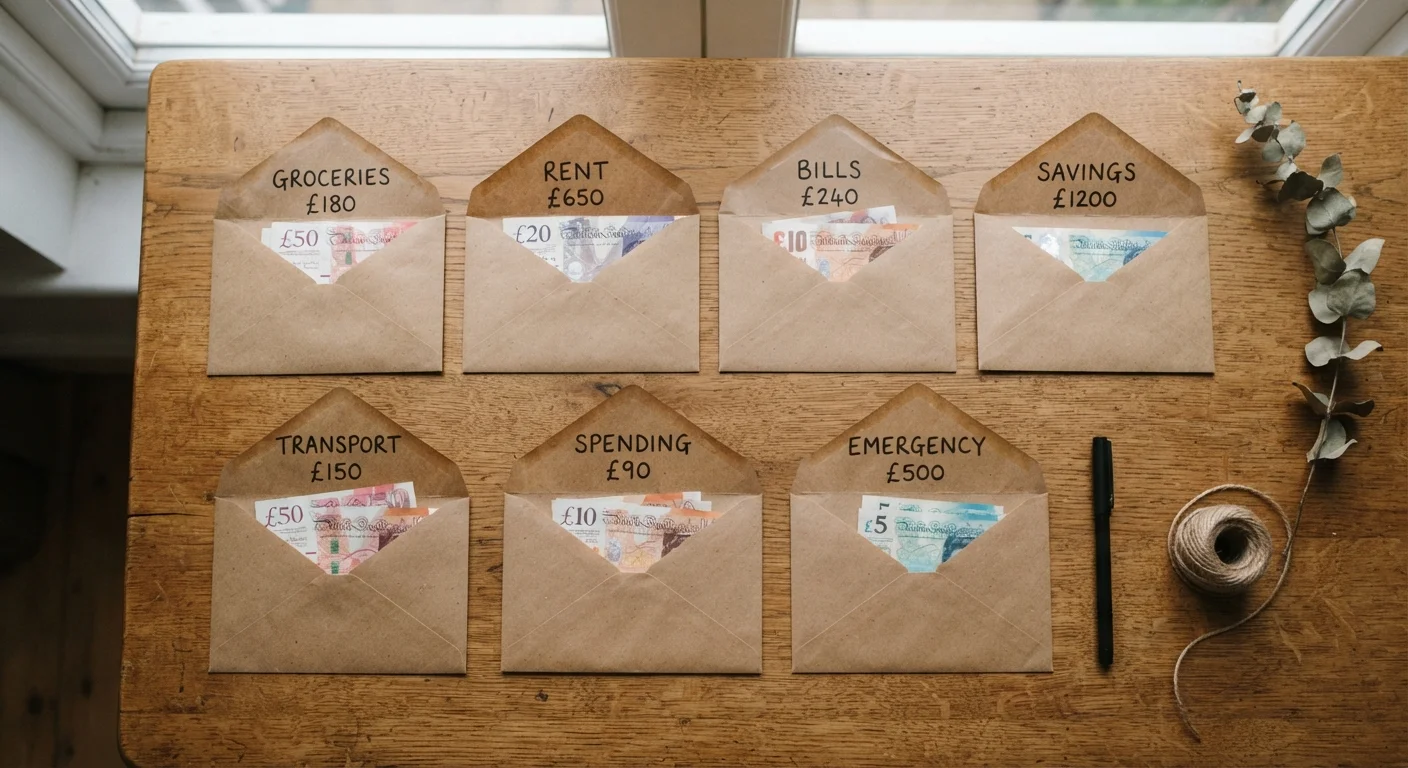
The envelope method - also called cash envelope budgeting - is a system where you divide your take-home pay into physical envelopes, each labeled for a specific spending category such as groceries, gas, or dining out. You spend only the cash inside each envelope for that purpose. When an envelope is empty, spending in that category stops until the next budget period. It's a hands-on, zero-guesswork approach to controlling discretionary spending.
The method functions as a zero-based budgeting tool: every dollar of income is assigned a purpose before the month begins, leaving no unallocated funds.
Where the Envelope Method Comes From
Cash envelope budgeting predates smartphones, spreadsheets, and even checking accounts as a mainstream household tool. For generations, families operating on wages paid in cash used physical envelopes or glass jars to divide money before it could disappear. The discipline was built into the system: once the grocery money was gone, that was it until next payday.
The approach gained a modern following largely through personal finance educators who advocated for it as a corrective to credit card overspending. Its core logic - that finite physical cash creates a harder spending boundary than a bank balance on a screen - is backed by consistent findings in behavioral economics. Spending cash tends to feel more real than swiping a card, which is why the method remains relevant even as digital payments have become the norm.
It sits within a broader tradition of zero-based budgeting, where every dollar of income is assigned a job before the month begins. If you're new to that concept, see our guide to personal budgeting from first paycheck to long-term stability for a fuller picture of how budget frameworks fit together.
How the System Actually Works
The mechanics are straightforward. At the start of each budget period - usually monthly or biweekly, matching your pay schedule - you withdraw cash and divide it into envelopes labeled by spending category. Common categories include groceries, gas, dining out, entertainment, clothing, and personal care. Fixed expenses like rent, utilities, and loan payments are handled separately through your normal payment methods and don't need envelopes.
Throughout the month, you spend only the cash in each envelope on its designated purpose. If your grocery envelope holds $400 and you reach $400 mid-month, grocery spending stops. No borrowing from other envelopes without a deliberate, conscious decision. No telling yourself you'll make up the difference later.
Start With Your Most Problematic Category
Rather than overhauling your entire budget on day one, try using a single envelope for whichever spending category most consistently blows your plan. One envelope is easier to manage and lets you experience the method's benefits before committing fully. Most people find it easier to expand the system after a successful first month than to scale back an overly complex setup.
At month-end, any leftover cash is yours to redirect intentionally - toward savings, an emergency fund, or debt repayment. That regular surplus-handling habit is where the envelope method connects to longer-term financial goals. For ideas on what to do with consistent leftovers, our guide to saving on a tight budget covers practical options even when margins are thin.
Who Benefits Most - and Who Might Struggle
The envelope method is particularly effective for people who overspend in specific, recurring categories. If your bank statement at month-end consistently shows more at restaurants than you planned, a dining envelope with a hard cash limit cuts that pattern off at the source. It's also well-suited to people who find digital tracking abstract - seeing a nearly empty envelope is more visceral than reading a number on an app dashboard.
The method is less practical if you make most purchases online, rely heavily on credit card rewards, or travel frequently for work and need to expense costs. It also doesn't address the structural side of budgeting - it won't help you plan for annual bills, irregular income, or long-term savings goals on its own. For that broader planning work, see our piece on building a budget that holds up all year long.
If handling physical cash feels impractical, low-tech tracking methods - including written ledgers and digital envelope apps - can preserve the category-limit structure without requiring cash withdrawal.
Setting Up Your Envelopes: A Practical Starting Point
Before you label a single envelope, spend fifteen minutes reviewing two to three months of actual spending. Most banking apps and credit card portals will categorize transactions for you automatically. Note where you're consistently going over what you intend to spend - those are your envelope categories.
Assign realistic amounts based on your history, not aspirational targets. If you've averaged $520 a month on groceries, starting your grocery envelope at $300 will almost certainly fail and leave you discouraged. Trim modestly - say, to $480 - and adjust downward as the habit solidifies.
~$1,000
Average monthly U.S. household food-at-home spending
According to U.S. Bureau of Labor Statistics Consumer Expenditure data, groceries represent one of the largest variable budget categories for American households - making it a common envelope system starting point.
83%
Americans who say they overspend in at least one category
A recurring finding in consumer financial surveys conducted by organizations including the National Foundation for Credit Counseling is that most households can identify at least one spending category that regularly exceeds their intentions.
Keep your initial setup simple: three to five envelopes is enough. Adding too many categories too soon makes the system feel like a chore. Once the habit is established after a month or two, you can add categories or refine amounts. The goal is a system you'll actually maintain, not a perfect system you'll abandon by week three.
As you accumulate consistent surpluses, consider directing them toward goals that compound over time. Our overview of making your savings work harder covers general principles for putting those surplus dollars to productive use.
This article is for general informational and educational purposes only and does not constitute personalized financial advice. Consider consulting a qualified financial professional regarding your individual circumstances.