

Key Takeaways
The Gym Isn't the Only Path to an Active Life
For many Americans, a packed schedule isn't an excuse - it's a genuine reality. Between work demands, family obligations, and commuting, carving out a dedicated hour at the gym can feel impossible on most days. The good news is that research consistently shows physical activity doesn't need to come in one tidy block to be beneficial.
Public health guidance from the CDC recognizes that moderate-intensity activity accumulated in shorter bouts - even ten minutes at a time - contributes to overall weekly movement goals. That reframes the question entirely: instead of asking when can I get to the gym?, the better question is where does movement already fit in my day?
The strategies below are designed for real schedules - not idealized ones. They require no membership, no special equipment, and no single free hour. If you're returning to activity after time away, see our guide on restarting exercise safely before ramping up intensity.
Use your commute as built-in movement
If you drive to work, consider parking several blocks away and walking the remainder. Train or bus commuters can get off one stop early. Even a brisk ten-minute walk each way adds roughly 100 minutes of moderate activity per week - a meaningful portion of the 150 minutes most adults are advised to aim for. Walking at a pace that elevates your heart rate slightly and warms you up is enough to count.
Cycling to work is another option worth exploring if your distance and infrastructure allow it. Many employers now offer secure bike storage or shower facilities as commuter benefits.
A brisk walk to and from transit adds up to real weekly activity without touching your free time.
Treat work breaks as movement windows
Most desk workers have some form of break built into their day - lunch, a coffee pause, or time between calls. A ten-to-fifteen-minute walk during lunch is one of the simplest and most evidence-supported habits for combating the effects of prolonged sitting. Replacing one sedentary break per day with a short walk is a low-barrier starting point.
If walking outside isn't practical, even standing up and doing a few minutes of light movement - marching in place, shoulder rolls, or calf raises - helps interrupt long sitting periods, which research associates with metabolic and cardiovascular risks independent of overall activity level.
Replacing one sedentary break a day with a short walk is a low-barrier, high-return habit.
Stack movement onto tasks you already do
Habit stacking - pairing a new behavior with an existing one - is a well-documented behavior-change strategy. Applied to movement, it means attaching physical activity to tasks already embedded in your day. Examples include doing calf raises while brushing your teeth, taking phone calls standing or walking, or doing a set of bodyweight squats while waiting for your coffee to brew.
These micro-moments won't replace a full workout, but they accumulate. More importantly, they train the underlying habit of linking movement to daily life - which is the foundation of sustainable activity for people with irregular schedules.
Habit stacking turns existing daily tasks into automatic opportunities for movement.
Make household tasks count
Vigorous housework - vacuuming, scrubbing floors, carrying laundry up stairs, mowing the lawn - elevates heart rate enough to qualify as moderate-intensity activity. Yard work, raking, and shoveling can be even more demanding. These aren't consolation prizes for missing a workout; they're legitimate contributors to your weekly movement total when performed with some intention and effort.
The key is recognizing them as activity rather than dismissing them. Wearing a fitness tracker or simply being mindful of the effort level can help shift your perception and keep you motivated on days when nothing else fits in.
Vigorous housework legitimately contributes to weekly activity goals - it counts.
Build a short at-home routine that needs nothing
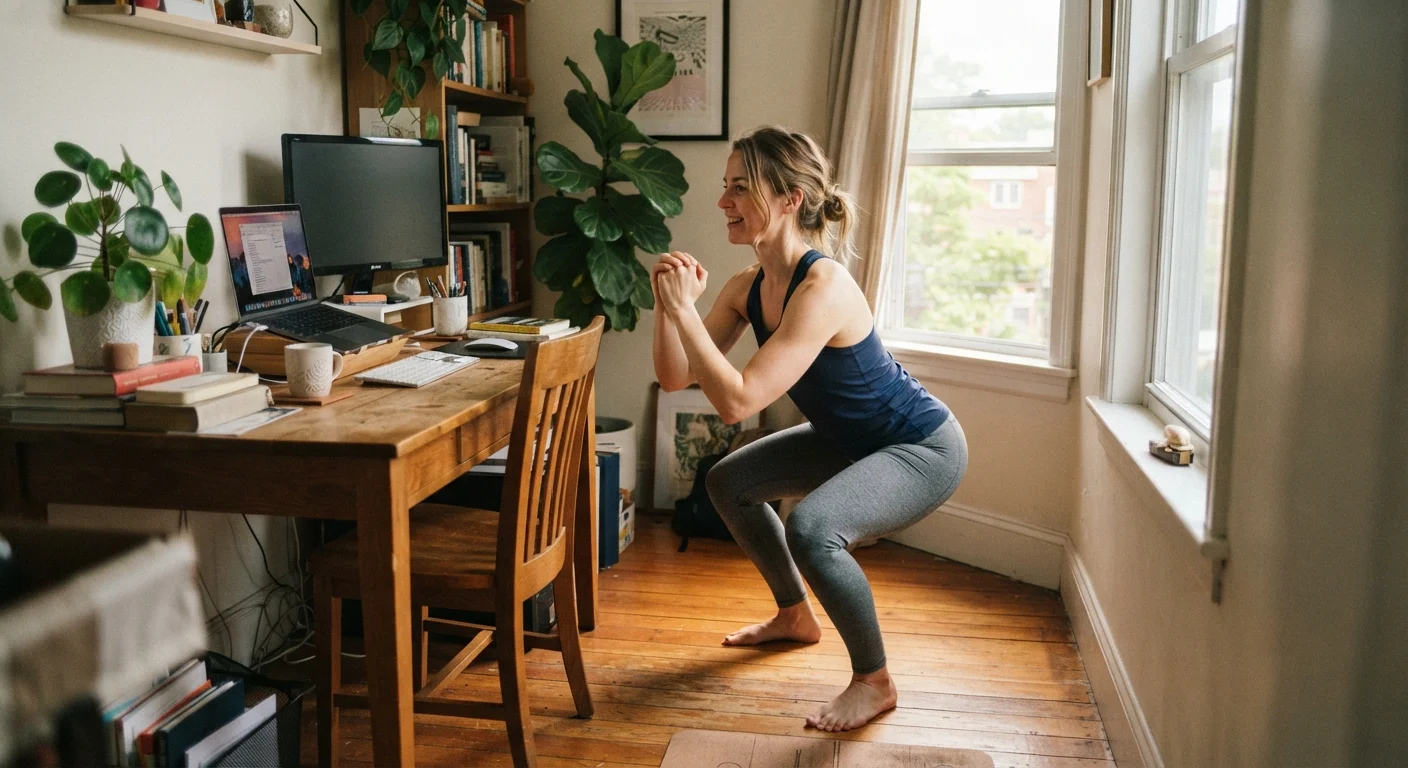
Bodyweight exercises require no equipment, no gym, and very little space. A ten-to-twenty-minute routine of movements like squats, lunges, push-ups, and planks can meaningfully challenge your muscles and cardiovascular system when performed consistently. Short sessions done several times a week can support strength, endurance, and mobility - particularly when combined with incidental movement throughout the day.
If you're unsure where to start, our beginner's introduction to moving more walks through the fundamentals without assuming prior experience. For a deeper comparison of home versus gym training, see home workouts vs. gym training.
A consistent ten-minute bodyweight routine beats an occasional hour-long session you rarely manage.
Involve the people already in your schedule
Fitness doesn't have to be a solo activity carved out from family or social time. A walk after dinner with a partner or child, an active weekend outing, or a standing walking meeting with a colleague integrates movement into time you were already spending with others. This also provides social accountability, which research suggests improves exercise adherence.
Reframing activity as something you do with your schedule - not around it - is ultimately the most sustainable mindset shift available to busy people.
Integrating movement into existing social time removes the scheduling conflict entirely.
Making It Stick Over the Long Run
The strategies above work best when they become habitual rather than effortful. One practical tool is treating movement like any other appointment - blocking it in your calendar so it competes for time on equal footing with meetings and errands. Getting more from your calendar app can help you set recurring reminders and protect those windows.
Schedule It Like a Meeting
Movement that lives on your calendar is far more likely to happen than movement you intend to fit in. Try blocking even ten-to-fifteen-minute slots labeled 'walk' or 'stretch break' in your scheduling app. Treat them as non-negotiable unless a genuine conflict arises - and reschedule rather than cancel.
Physical activity also works in concert with other health habits. Staying active supports appetite regulation, sleep quality, and stress resilience - all of which connect to what you eat and how you recover. Our healthy eating hub offers practical guidance on nutrition that complements an active lifestyle. And once your schedule opens up even slightly, building a structured weekly routine can help you scale what you've started here into something more deliberate.
This article is for general informational and educational purposes only and does not constitute medical advice. Consult a qualified healthcare professional before beginning any new exercise program, especially if you have an existing health condition.